
Some food styles don’t lend themselves well to shortcuts. Tavern-style pizza is one of them.
Thin, crisp, yeasted, square-cut, and designed to be eaten casually rather than ceremoniously, tavern pizza was never meant to be flashy. Its purpose was practical: keep people seated, keep drinks flowing, and offer something satisfying without filling patrons up too quickly. The fact that it has endured for nearly a century speaks to how well it accomplishes that goal.
While the true origins of tavern-style pizza remain a point of debate — most often traced back to Chicago or Milwaukee in the 1930s and ’40s — the philosophy behind it is clear. This was bar food with intent. Pizza built to accompany conversation, not dominate it.
At Division Brewing Pizza Kitchen in Arlington, the team isn’t trying to rewrite that history. They’re simply trying to honor it — and, more importantly, execute it correctly.
Tavern-style pizza didn’t begin as a destination dish. It was a supporting player. Bartenders needed something quick, affordable, and snackable — something that encouraged patrons to stay for another round. The result was a thin, yeasted dough that baked quickly, crisped evenly, and could be cut into squares for easy sharing. That DNA is intact at Division.
These pizzas aren’t oversized or overbuilt. They’re intentionally light. The kind of pizza you order “to start” and suddenly realize you’ve eaten most of without thinking about it. The kind that pairs naturally with beer rather than competing for attention.
What separates Division Brewing Pizza Kitchen from novelty attempts at tavern pizza is commitment. Wade Wadlington, co-founder, didn’t guess his way into this style. He traveled north, into the heart of tavern-pizza country, to eat the originals — comparing textures, studying crusts, and understanding the nuances that separate generic thin crust from true tavern-style.
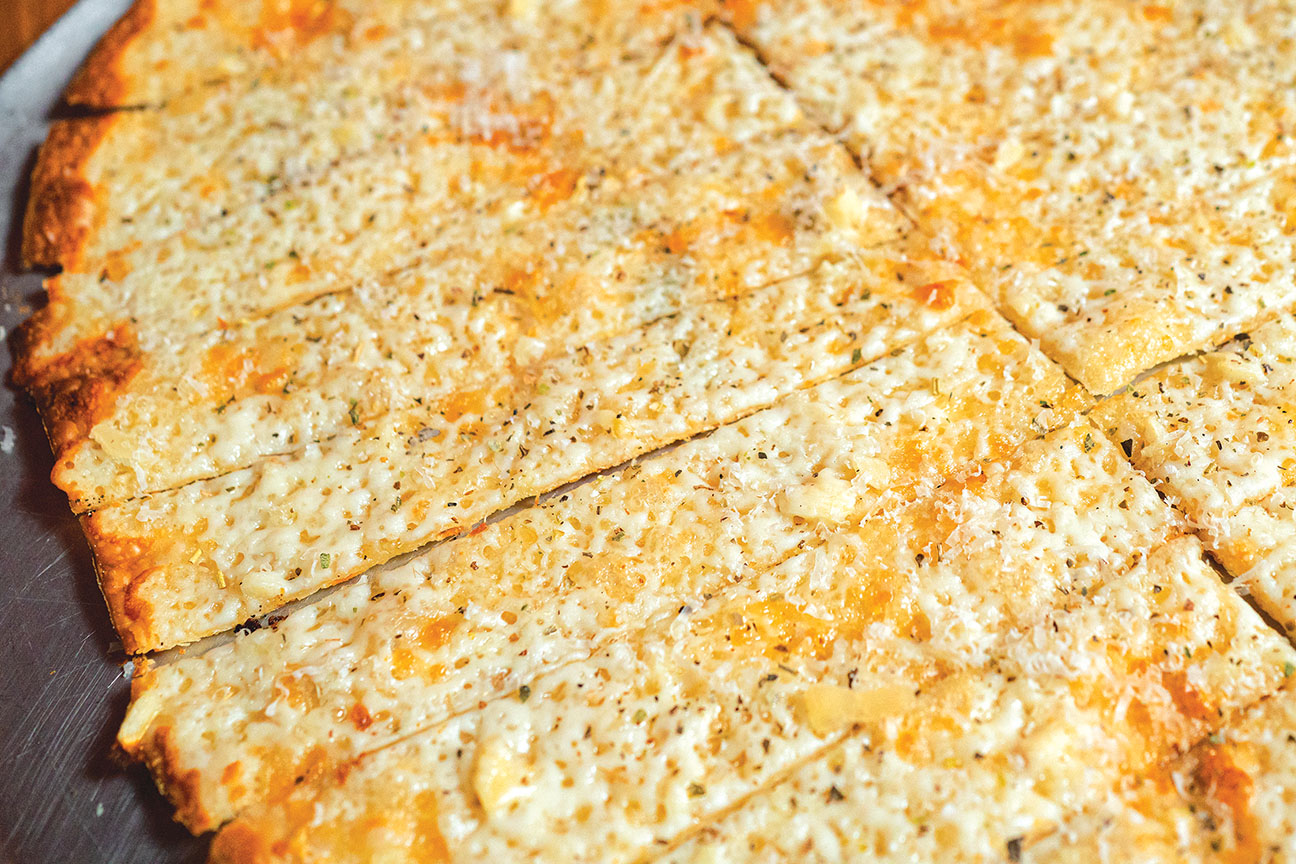
Division uses a cold-fermented dough, allowing flavor to develop slowly over time rather than being rushed. Once ready, the dough is rolled thin and docked — small holes poked across the surface to prevent bubbling and ensure an even bake. Each skin is stacked carefully between parchment until service, then dusted with cornmeal, topped, and sent straight into the oven.
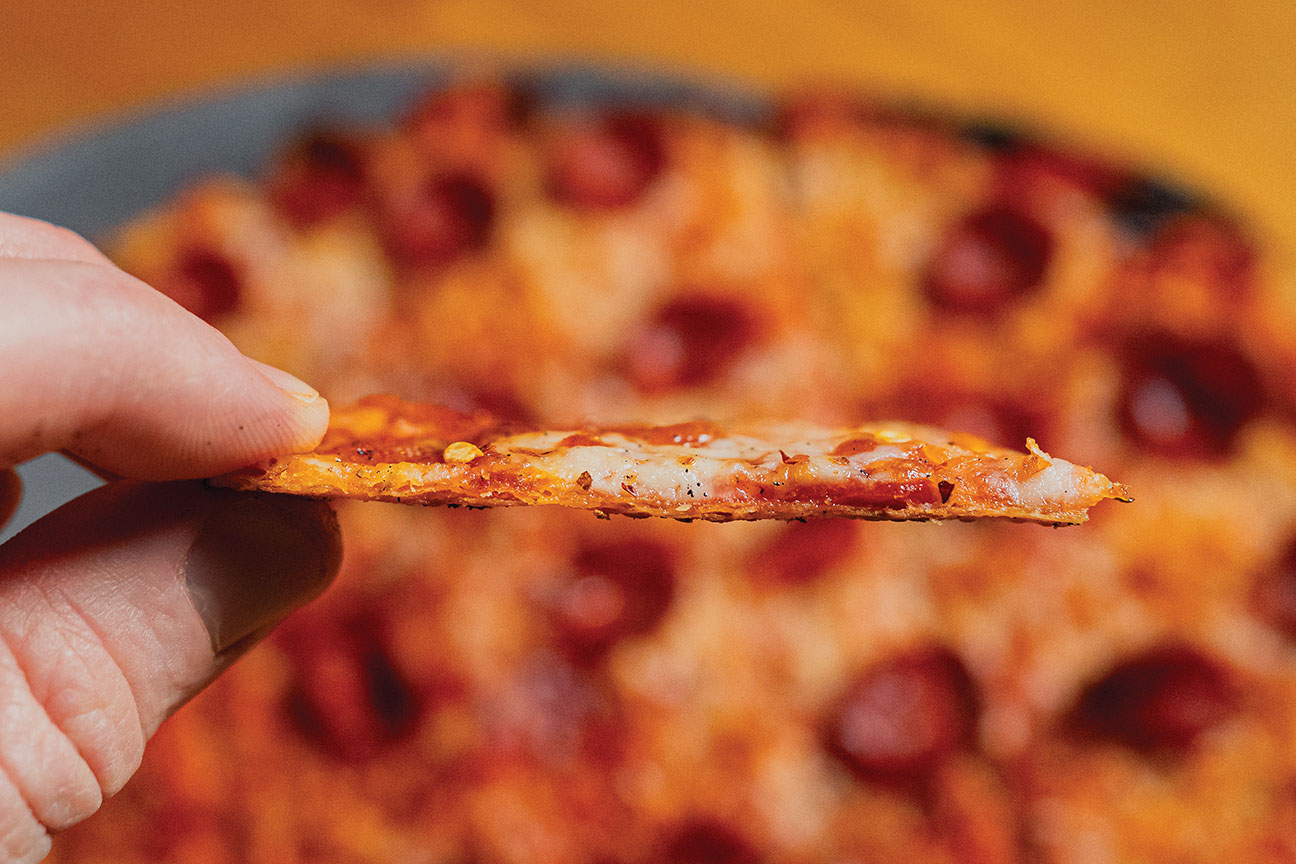
The result is a crust that’s crisp from edge to center, with no soft spots and no excessive chew. It snaps cleanly without crumbling. It’s light enough to snack on, yet sturdy enough to hold toppings without sagging.
The defining characteristic of Division’s tavern pizza is texture. Because of the thin, docked dough and high-heat bake, the pizza is crisp throughout — not just at the edges. There’s no fold, no droop, no need to support the slice with two hands. Each square is self-sufficient.
That texture makes the pizza uniquely drinkable food. You don’t feel weighed down after a few pieces. You don’t feel like you need a break before the next beer. It’s exactly what tavern pizza was designed to be. For golfers, that’s an easy parallel to draw.
After a long round — especially in Texas heat — you’re often craving something satisfying without being heavy. Something that fits naturally into a relaxed post-round setting. Division’s pizza checks that box effortlessly.
On a first visit, the Grafted is the right place to start.
This pie brings together pepperoni cups, handmade fennel sausage, soppressata, and cheese — a combination that feels indulgent without crossing into excess. Each component is layered with intention. The pepperoni cups curl and crisp in the oven, collecting pools of rendered oil that add richness and another layer of texture. The soppressata, tucked beneath the cheese, delivers a deeper, savory note without overwhelming the bite. The handmade fennel sausage varies from small, crisp bits to larger chunks that develop browned edges and real character. Every square tastes slightly different, which keeps you reaching back in.
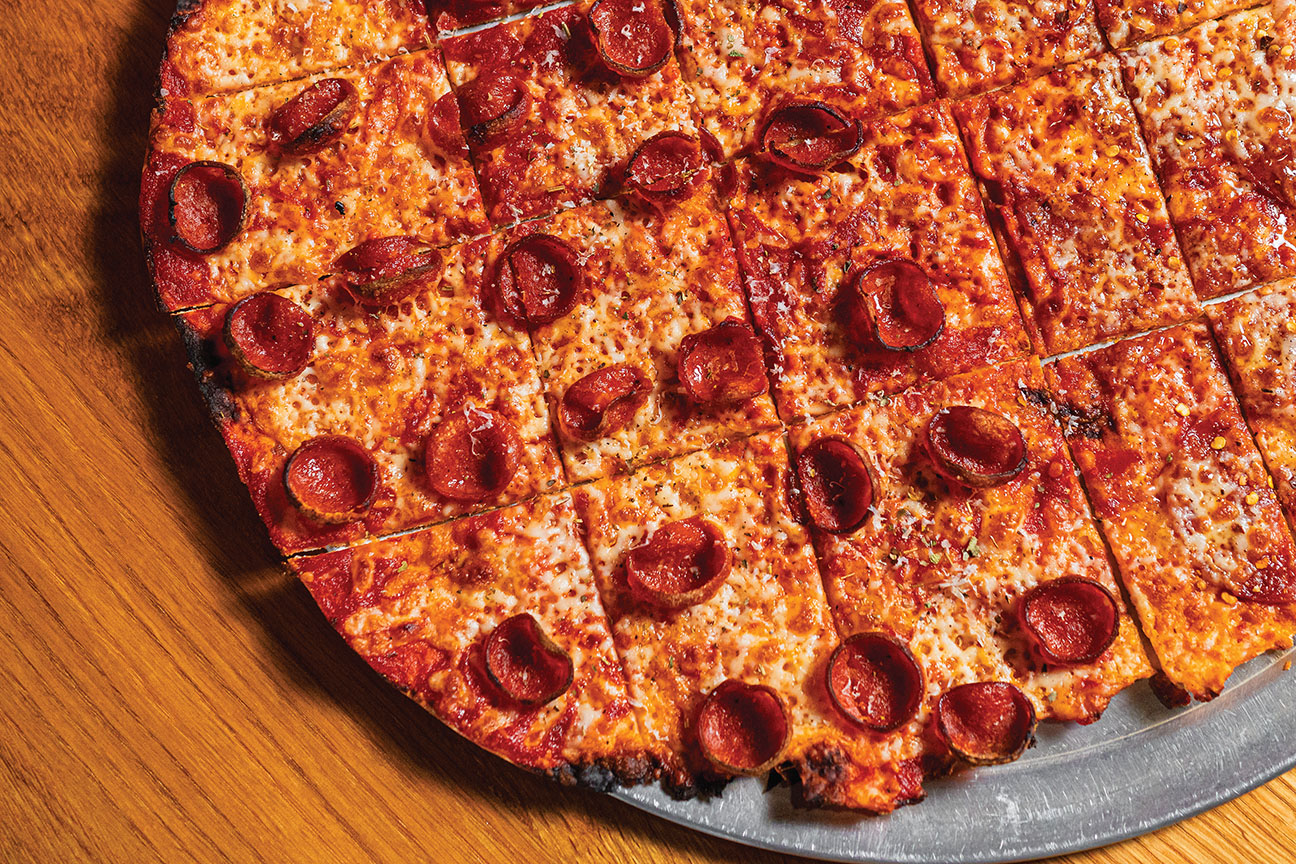
In a thoughtful, real-world touch, the kitchen even left a few slices plain for a picky young diner — a reminder that this is a place grounded in hospitality, not preciousness.
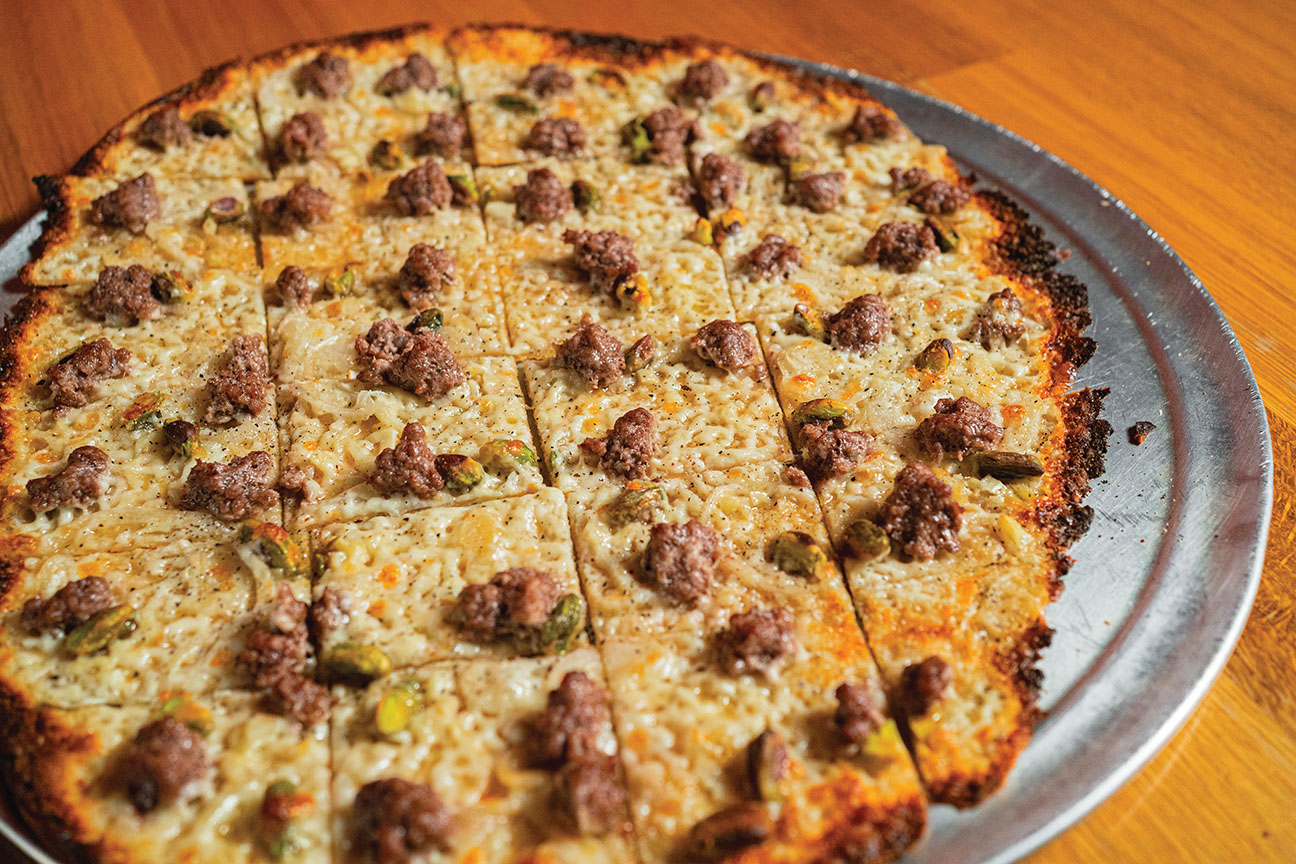
On another visit, we sampled ‘The Hot,’ a traditional pepperoni, and ‘The Rob.’ The Rob is where Division’s tavern pizza really shows its range. It leans savory and indulgent without crossing into heavy, built on the same crisp, cold-fermented crust but layered with toppings that reward slower, more deliberate bites. Boasting a white cream sauce, chunky, crispy bits of beef, a copious amount of garlic and onions, complemented with pistachios and a dusting of burger seasoning. Division’s ‘Hot’ pies bring a subtle heat — not novelty heat, but a measured warmth that builds gradually and plays well with the crisp crust and melted cheese. The spice never overwhelms the structure of the pizza, instead sharpening flavors and making each square feel just a little more craveable, and the pie is finished with hot honey, which balances the heat with a little sweetness.
What’s most impressive about Division’s tavern pizza is what it doesn’t do. It doesn’t chase extremes. The sauce isn’t aggressively sweet or heavy-handed. The cheese doesn’t smother the crust. The toppings don’t pile on for shock value. Everything exists in proportion. That restraint is rare — and intentional.
Division Brewing’s beers don’t exist to overshadow the pizza; they complement it. A crisp lager sharpens the crust. A pale ale cuts through the richness of sausage and cheese. Darker beers bring out subtle sweetness in the sauce. Nothing feels forced or prescribed. You’re trusted to find what works for you.
True tavern-style pizza is still relatively scarce in DFW. Plenty of places offer thin crust, but few commit fully to the technique, texture, and philosophy that define the style. Division Brewing Pizza Kitchen does — and does so confidently enough that it would hold its own against many northern counterparts. That’s not a small statement.
It’s the result of research, repetition, and restraint.
Finally. Division Brewing Pizza Kitchen isn’t trying to reinvent pizza.
It’s doing something far more impressive: executing a classic style with discipline, respect, and consistency. The result is pizza that feels perfectly at home alongside great beer, good conversation, and long afternoons that turn into evenings. Light enough to snack on. Structured enough to share. Thoughtful enough to keep you coming back.
The beer is excellent. The pizza is dialed in. And the experience fits naturally into the rhythm of life. That’s a combination worth revisiting.