
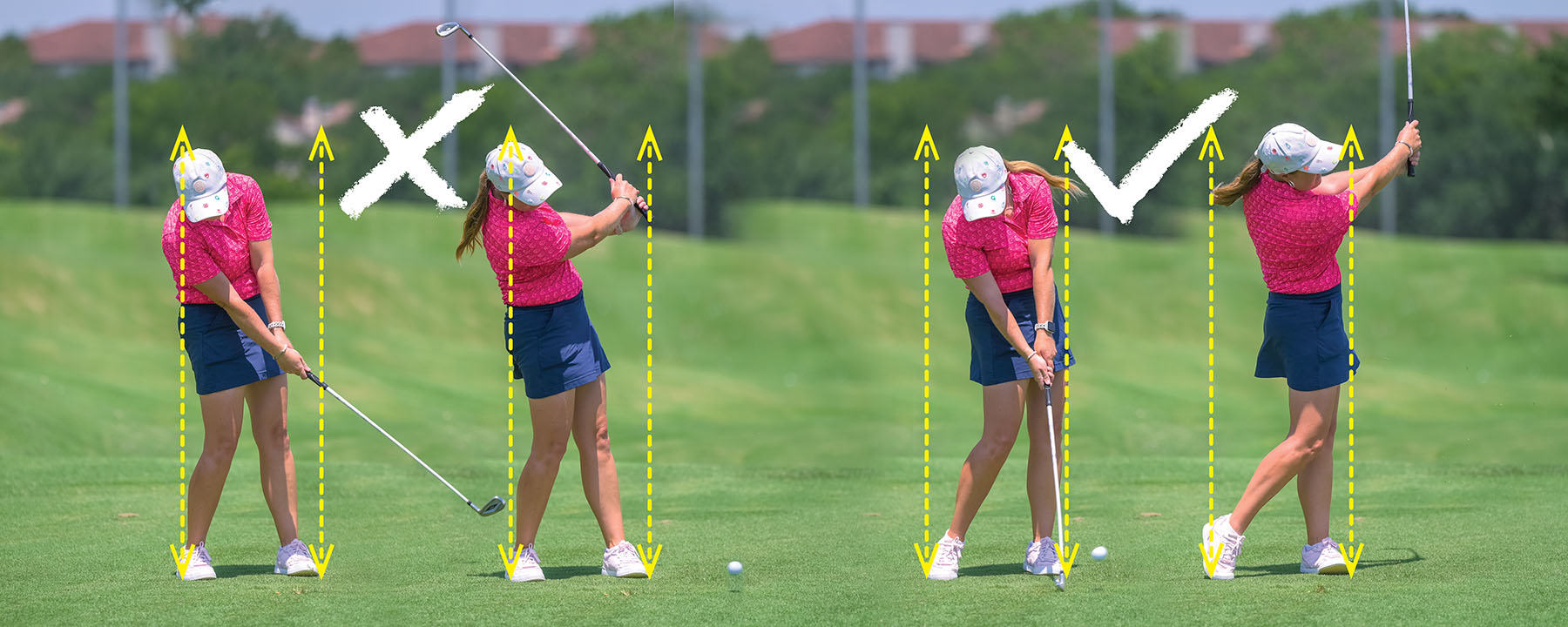
One of the most frustrating shots in golf is topping the ball. Instead of a pure strike, the club catches the upper half of the ball, sending it skidding across the ground. While many golfers believe they “looked up,” the real cause is usually much different.
Why Golfers Top the Ball
The golf ball sits on the ground, so your club must reach the bottom of its swing arc at or slightly after the ball. When players top the ball, one of these things usually happens:
They stand up through impact (early extension).
They lose posture during the downswing.
Their weight stays on the back foot.
Their arms pull in toward their body instead of extending.
They try to help the ball into the air by scooping it.
Remember: The loft on the club gets the ball airborne, not lifting with your hands.
The Proper Motion
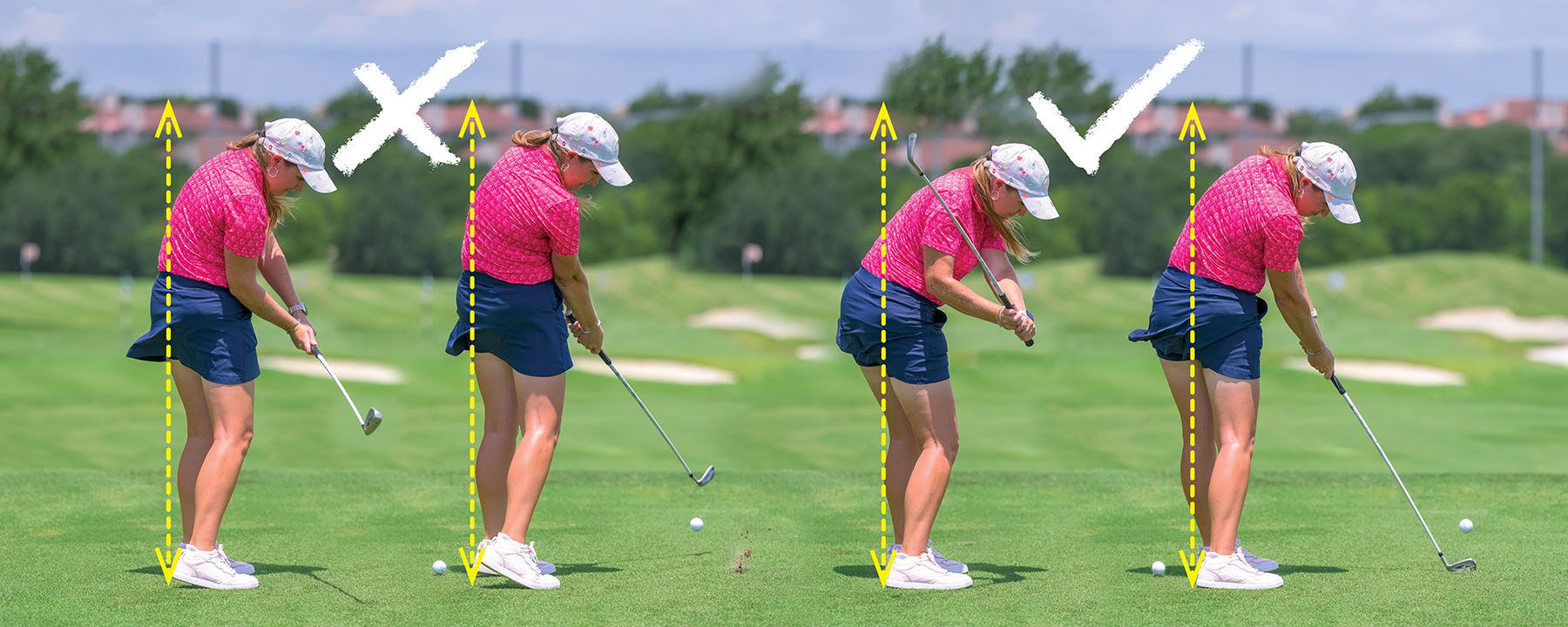
Good ball strikers maintain their posture while rotating through the shot. Their chest continues turning toward the target, pressure shifts into the lead side, and the arms extend naturally through impact.
Think of brushing the grass just after the ball rather than trying to lift it.
The Tee Drill
Place a ball on a low tee.
Set up with the tee in the center of your stance with a 7 iron. No ball for first few swings.
Make half swings without a ball.
Focus on striking the tee then the ground just in front of the tee.
Once consistent, place the ball directly on the low tee and recreate the same motion hit the ball then ground and making sure the tee moves.
This teaches your body where the bottom of the swing should occur.
Key Swing Thoughts
Stay in your posture.
Shift pressure into your lead foot.
Rotate through the shot.
Let the club’s loft launch the ball.
Finish with your chest facing the target.
Great contact comes from controlling the bottom of the swing. (Low point)
Fix Early Extension with the Wall Drill
This occurs when the pelvis moves toward the golf ball during the downswing, causing the body to stand up out of posture before impact.
The result? Thin shots, topped shots, heel strikes, blocks, hooks, and inconsistent contact.
What Causes Early Extension?
Many golfers unknowingly push their pelvis toward the ball because they’re trying to create power with their upper body instead of rotating around their spine. As the hips move closer to the ball, the arms lose room to swing, forcing the club to reroute through impact.
Great players maintain their posture while their hips continue to rotate around them, not toward the golf ball.
One of the best drills to improve body rotation and eliminate early extension is the Wall Drill.
Stand in your golf posture with your glutes lightly touching a wall or the back of a sturdy chair.
Cross your arms over your chest or hold a club across your shoulders.
Make slow practice backswings while keeping your trail glute in contact with the wall.
As you begin the downswing, feel your lead glute replace your trail glute against the wall.
Continue rotating until your chest faces the target while maintaining light contact with the wall throughout the motion.
Once you do this with the wall hit some shots with a chair on your tail recreating the same feeling when hitting and then without the chair.
The goal is not to press harder into the wall, but simply to keep your hips rotating around your body instead of moving toward the golf ball.
What You Should Feel
Your hips rotate instead of thrusting forward.
Your chest stays in posture longer.
Your arms have room to swing freely.
Your balance remains centered throughout the swing.
Initially, this movement may feel exaggerated, but it’s often exactly what golfers need to experience proper hip rotation.
Things to Remember
The objective isn’t to keep your hips perfectly still. Great golfers move dynamically they simply rotate efficiently without moving closer to the golf ball.
If you struggle with inconsistent contact, topped shots, or heel strikes, spend just five minutes a day with the wall drill. It develops proper body rotation, improves sequencing, and helps create the space needed to deliver the club consistently. Sometimes the simplest drills produce the biggest improvements.
I hope these drills help you see some more consistency in your ball striking.