
Cedar Crest Golf Course in South Dallas has been a staple of golf in Dallas since it opened in 1919 and is famous for hosting the PGA Championship nearly 100 years ago in 1927. Designed by legendary architect A.W. Tillinghast, Cedar Crest originally opened as a private course before the City of Dallas purchased it in 1946 following the stock market crash and the ensuing Depression. However, in 2026, the combination of course design, conditions, and daily rates at Cedar Crest makes it a must-play for those looking for a shorter drive and lower cost.
The facilities at Cedar Crest are pretty much what you would expect from a municipal facility. Friendly pro shop staff, a full driving range, and putting and chipping greens provide a solid warm-up before you hit the course. Located just steps from the pro shop inside the clubhouse, Legends Grill offers a surprisingly extensive menu for golfers looking to grab a bite before or after their round. Breakfast options include sandwiches, burritos, and quesadillas, while lunch favorites range from burgers and hot dogs to sandwiches, baskets, and quesadillas. Signature items include Jan’s Old Fashioned Cheeseburger, the Greenside Chicken Quesadilla, and hand-battered catfish baskets, all providing hearty portions that fit the blue-collar character of Cedar Crest. Whether it’s a quick breakfast before an early tee time or a burger and fries after 18 holes, Legends Grill serves as a convenient gathering spot for golfers throughout the day.
Once you step onto the course, you will have five different tee boxes to choose from. The Tournament and Black tee boxes play at 6,726 and 6,582 yards, respectively, and both play to a par 70. The other three tee boxes range from just over 6,000 yards to just under 5,000 yards and play to a par 71, allowing golfers of all skill levels to enjoy their round.
The first hole at Cedar Crest is a dogleg-right par 5 that plays 611 yards from the tips. Normally, starting on a par 5 can be comforting, but the opener at Cedar Crest is ranked as the No. 2 handicap on the course, and deservedly so. Players will want to take driver off the tee, as the bunker guarding the left side of the fairway is out of reach for most and provides a line that both keeps the tee shot safe and creates a favorable angle for the second shot. Missing a touch too far to the right can result in a lost ball or a challenging second shot that may require a punch-out or the ability to “bend it like Beckham” for those with the skill. Finding the fairway on the first is just the first step to a successful hole, as the lay-up shot requires both accuracy and distance control to avoid running through the fairway or finding trees that may block out your approach to the green. If you can get a wedge in hand, it is a green light at the flag on the elevated green with a bunker guarding the right side. Players who miss the green have relatively straightforward chips or pitches left to get up and down for par.
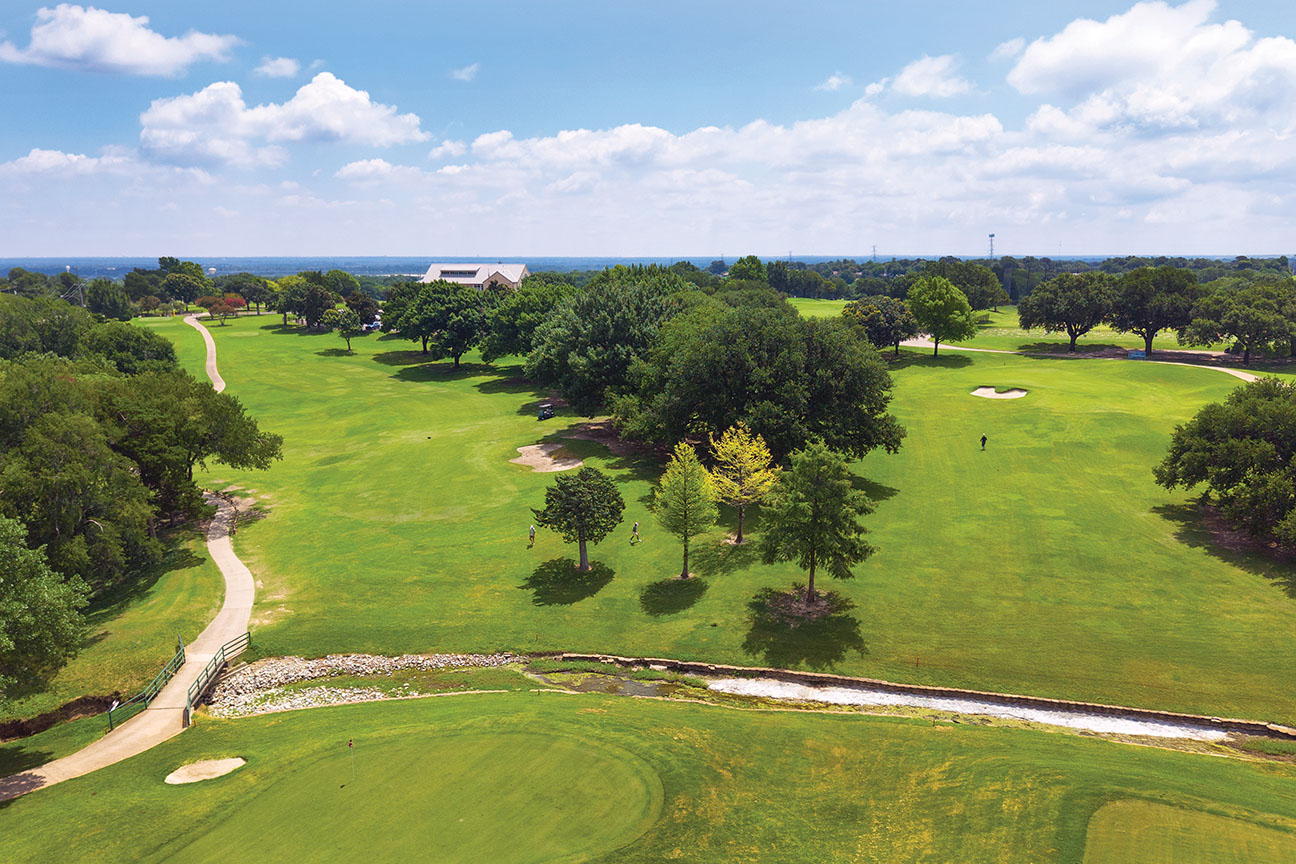
If you don’t quite get off to the start you envisioned on the first, the short par-4, dogleg-right second hole offers a chance to get back on track. At just 362 yards from the tips, long hitters can test the right side by taking it over the trees on a line just left of the green, leaving a short wedge shot into a small target. For those who prefer a more conservative approach, a fairway metal or long iron at the tall tree in the fairway leaves a short iron into the green, though the added distance certainly makes the second shot more challenging. With that being said, there are no bunkers around the second green, making an up-and-down for par a realistic possibility if you happen to miss the putting surface.
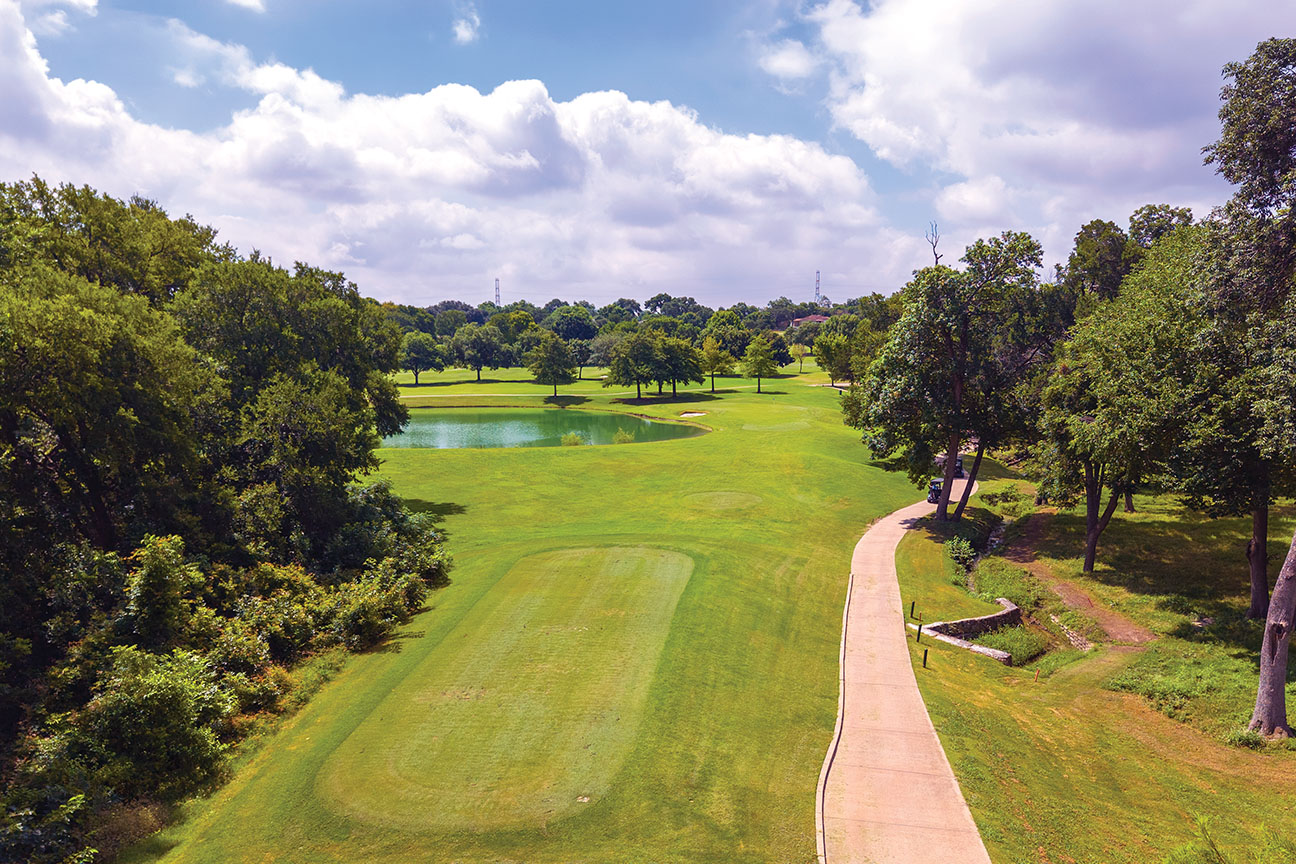
The par-3 third is the most difficult of the par 3s at Cedar Crest, which is saying something because each one offers a challenge. Playing 206 yards from the tips, players must navigate a bunker and water left of the green while making sure not to bail out too far right, where a slope funnels balls away and makes for a really tough up-and-down. No matter where the pin is, players should aim for the middle of the green and set themselves up for a two-putt par, which is a great score on the third.
Number 4 at Cedar Crest is one of my favorite par 4s on the course, as it demands a great tee shot to set up any chance at birdie. The fourth plays 467 yards from the back tees and has a slight dogleg right that players need to be aware of. Favoring the left side of the fairway is important to avoid the cluster of trees lining the right side of the hole. Finding those trees often requires a punch shot or a crafty recovery over the top. A solid drive will leave a long iron or mid-iron for most players, and it is very important to leave yourself on the correct section of the green. A large slope in the middle of the green makes for a very challenging two-putt from the lower tier to the upper tier and vice versa. Further, anything long of this green leaves one of the tougher up-and-downs on the entire course. Smart golf is rewarded on the fourth, and walking away with par feels like a win.
Holes 5 and 6 are both fairly straightforward. The fifth is a 402-yard par 4 with trouble down the left, but plenty of room to miss right and a wide fairway. From there, a wedge or short iron will leave players with a chance to make birdie after a tough opening stretch. The par-3 sixth plays 185 yards uphill with a bunker short of the green. The green does have a good amount of slope on the front side, meaning players will want to make sure they take that extra club if the pin is in the front.
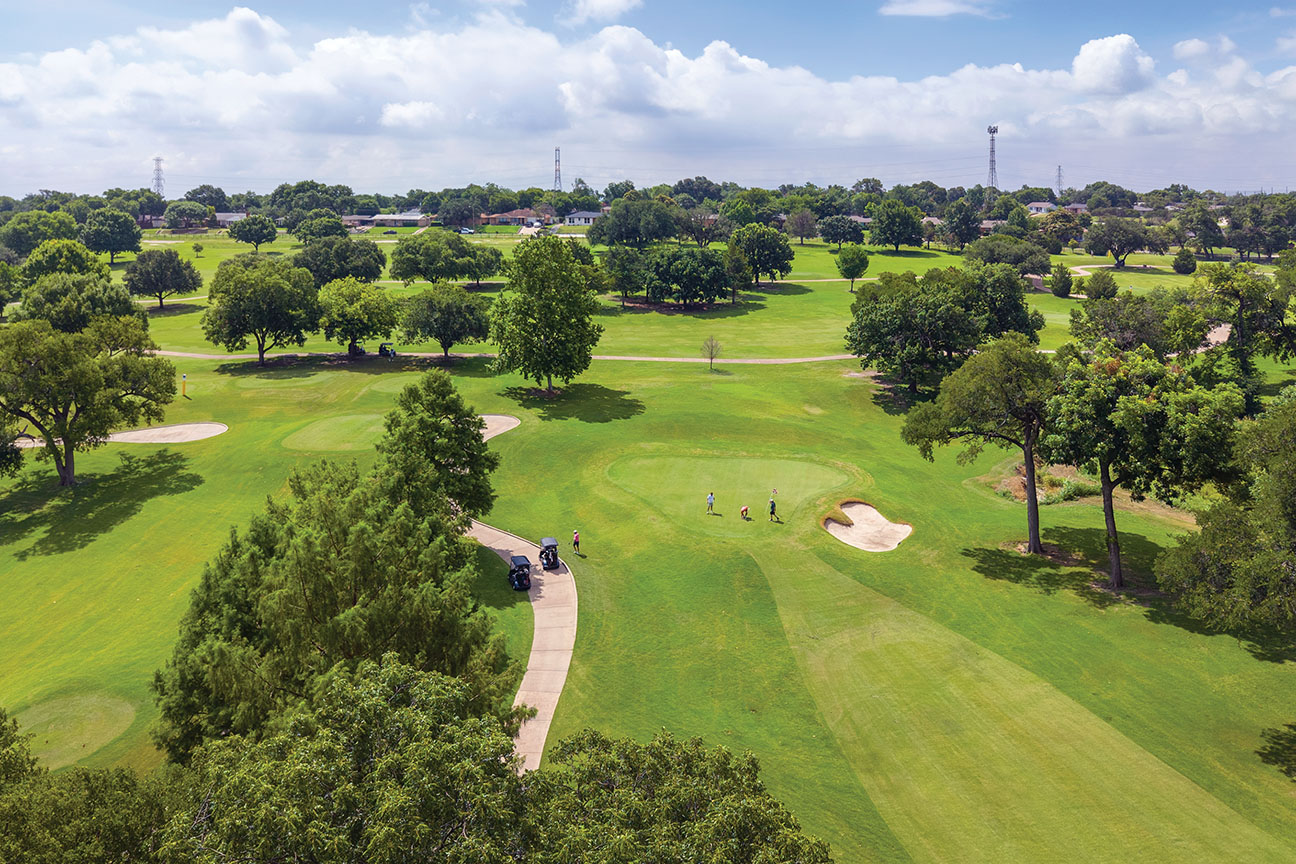
The 552-yard seventh is the second par 5 at Cedar Crest and is much more gettable than the opener. Players will face a bit of a blind tee shot from the back tees. I like to use the leftmost tree on the right side of the fairway as a reference point, usually trying to draw it ever so slightly off that line and into the fairway. Although the hole is not overly long, hitting the green in two is pretty challenging, as the landing area between the bunkers around the green is not overly large. Those who are not hitting enough club to reach the green will want to make sure they can carry the bunker about 40 yards short and right of the green for a chance to run the ball up or leave themselves a straightforward chip. The left bunker is not a bad spot to be at all, and the sand at Cedar Crest is pretty solid and consistent for a public track. The seventh is a hole where you can walk away with birdie or par and build some momentum heading into the short par-4 eighth.
The eighth is a fantastic hole and one that shows distance is not everything when it comes to providing a challenge. The short, dogleg-right par 4 will call for either a long iron or utility club for most players off the tee. The idea is to avoid the bunker on the left side of the fairway that sits about 220 yards from the back tee box while hitting it far enough to stay out of the rough on the right, which can be very unpredictable. The second shot will leave a wedge or short iron in most players’ hands, allowing them to get aggressive. Bunkers guard both the front and back of the green, and a creek short of the green usually swallows any shots left short. The eighth green has an upper tier on the right side, and pins on that tier are difficult to attack because the landing area is fairly shallow. Players should get aggressive to pins on any other part of the green and hope to roll one in for birdie.
The uphill par-3 ninth is one of the shorter par 3s on the course at 180 yards from the tips. A bunker short of the green is the place players most want to avoid, as is missing long right. The best miss is a little short of the green and either right or left of the greenside bunker. Those who hit the green off the tee will have a chance at a routine par or even a birdie.
The 482-yard tenth is ranked as the toughest hole on the course and plays as a par 4 from the two back tee boxes and a par 5 from the three forward boxes. While the tenth is the longest par 4 on the course, it is a bombs-away downhill tee shot that can leave you with less distance for your second shot than you might expect based on the scorecard yardage. The green is guarded by bunkers on either side, as well as a creek about 50 yards short that really comes into play if you miss the fairway and need to run something up onto the green. Other than that, the tenth is a what-you-see-is-what-you-get type of hole defined by distance.
The par-3 eleventh continues the trend of long par 3s at 226 yards from the back tees. The green slopes back to front and right to left, with a bunker guarding the right side. However, the contours of the green make it fairly receptive for such a long hole. Those who like to fade the ball will be able to access the tricky pins on the right side of the green. Short of the green leaves an uphill chip and is definitely a better spot to be than long.
The short par-4 12th is a fun yet tricky hole. At 358 yards from the tips, players have a few options off the tee. Those who like to hit high bombs will want to go over the tree on the left side of the fairway or work one right to left off the fairway bunkers on the right. However, anything that gets cooking too far left can either catch the tree or find out of bounds. The safest play is to hit something between the fairway bunkers on the right, but even that shot requires precision. Bunkers protect both sides of the green, but if you are able to find the fairway, a short wedge shot should keep them out of play. A good tee shot on the 12th makes all the difference, and players can walk away with a birdie if they execute it.
The 13th runs parallel to the 10th, once again offering that downhill tee shot, except this time most players will have a wedge or short iron into the green. At 408 yards from the back tees, driver is the best play, especially for those who like to work the ball right to left. Even leaving it out to the right still provides an opportunity to attack the pin. However, the green is fairly narrow with a bunker guarding the left side, making it even more important to hit a solid tee shot and leave yourself a comfortable number with a wedge.
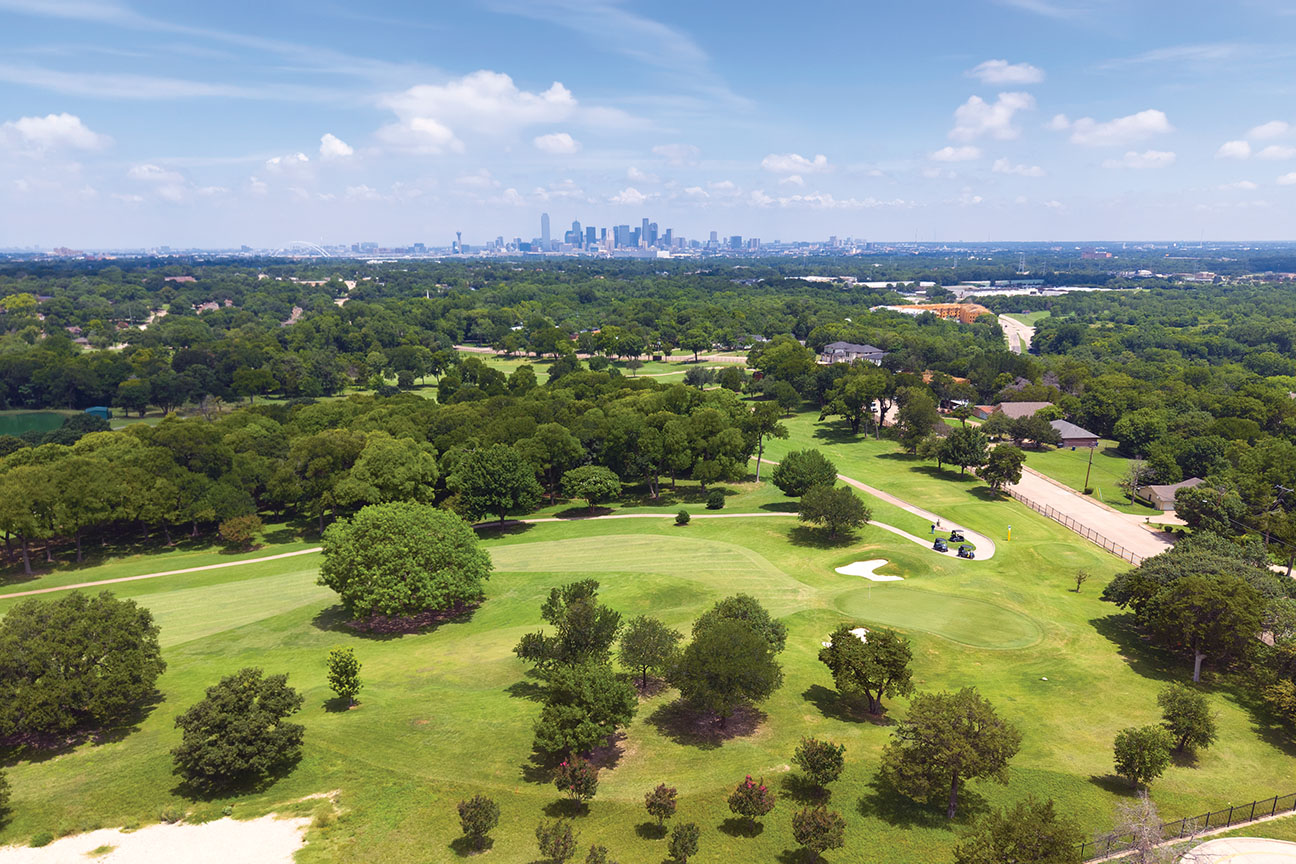
The par-5 14th is 551 yards from the tips and features a deceptively challenging tee shot. Most players will want to hit driver. Those who work the ball left to right must avoid a tree that sits just left of the tee box, while those who prefer a draw will want to start it down the right side of the fairway. However, with the fairway’s pronounced right-to-left slope, it is easy to overcook it and find yourself in the rough. For those who find the fairway, long hitters will definitely have a chance to reach the green in two. For players who choose to lay up, it is hard to miss the massive tree that sits in the middle of the fairway about 70 yards short of the green. It is crucial to miss that tree on either side to leave a wedge and a realistic birdie opportunity.
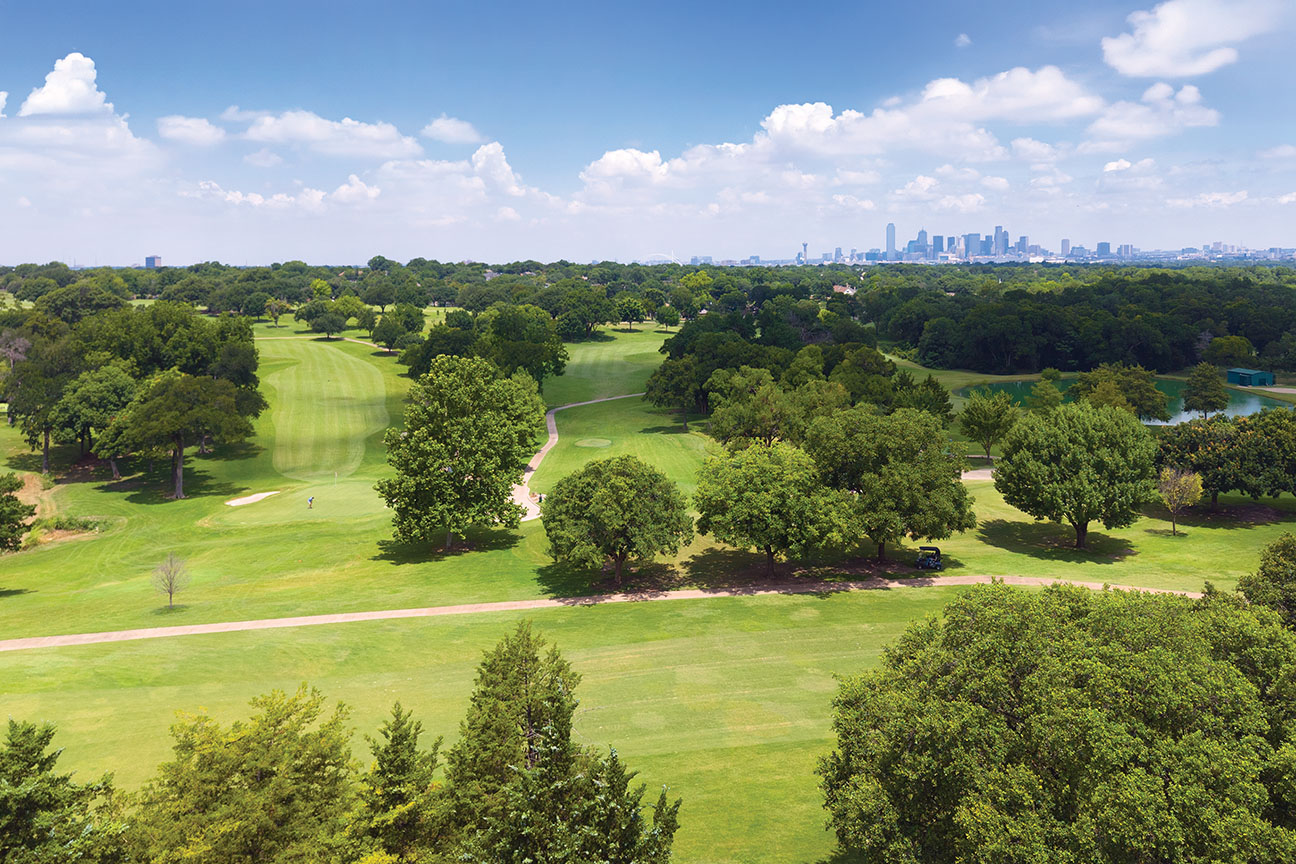
The 211-yard par-3 15th plays downhill and offers an amazing view of the Dallas skyline. Bunkers guard either side of the green, which slopes from left to right. Although the hole is long, I think it is one of the easier par 3s on the course, as players can bail out short left and leave themselves a relatively simple chip.
Number 16 is a 561-yard par 5 with a green that is difficult to reach in two, but it still presents a good birdie opportunity. Off the tee, it is imperative to avoid the fairway bunker that sits about 270 yards from the back tee on the right side. Anything in there will leave you with a much longer third shot than you would like. If you find the fairway, there is certainly a shot where you can try to run it onto the green or fly it all the way there, but the reward for going for it is not quite as significant as it is on some of the other par 5s. There are several runoff areas around the green, as well as a bunker guarding the front, making for no easy up-and-down. Par is a great score on the 16th before you head to the final par 3 of the day at 17.
The par-3 17th is another small green that forces players to hit a quality iron shot. The hole normally plays around 190 yards from the back tees and features another green that slopes left to right and back to front. A bunker sits short right of the green and can catch plenty of balls if the wind is blowing from the left. The safe miss is short left of the green, while those who find the putting surface will have a great chance at par or even birdie.
The par-4 18th is 428 yards from the back tees and features one of the most difficult tee shots on the course. Visually, it seems like there is far less room on the left side than there actually is. I have definitely hit a few tee shots that found trouble on the right even when I thought they would be perfectly fine. The best line is to take driver at the tree on the left side of the clubhouse and let it rip, making sure to avoid the left fairway bunker that sits about 265 yards from the back tees. It can be easy to find yourself too far right, but a tee shot that finds the fairway will leave a short iron or wedge for most players. The 18th green is fairly generous and presents a full green-light situation to close out the round and give you and the fellas something to talk about afterward.
Cedar Crest is not only a piece of Dallas and Texas golf history, but also one of the best daily-fee courses you can find in DFW. It is hard to find a public track with as much character and design quality as Tillinghast’s work in South Dallas. Conditions are consistently solid, with quality bunkers, greens that typically roll true, albeit a touch slow at times, and fairways that provide clean lies.
Peak weekend rates are only $54, making Cedar Crest one of the best values in the Metroplex and a great way to enjoy an affordable round on a course with unmatched history in the area.