
Meadowbrook Golf Course in Fort Worth has long been a Metroplex municipal staple. Originally opened in 1924 as the nine-hole Meadowbrook Country Club, this east side property was purchased by the city in 1938 and later renovated by Ralph Plummer in the early 1960s. Now, just after the course’s 100th-birthday celebration in 2024, Meadowbrook Golf Course has re-opened after a two-plus year, multi-million-dollar renovation.
The architecture team of John Colligan and Trey Kemp at Colligan Golf Design (Rockwood Park, Texas Rangers Golf Club) created something truly special in east Fort Worth, using the natural topography and incorporating elements from the original layout to test every club in your bag. For the most part, the course is different, although there are several holes that still harken back to the original routing with added challenges in abundance.
In addition to the course changes, a new logo and branding also add to the new identity of this historic property. The black-bellied whistling duck serves as the new logo, and for good reason, as you will see these visitors throughout your round, nestled near the larger, deeper irrigation ponds and streams that serve as the vascular system for this variable piece of land.
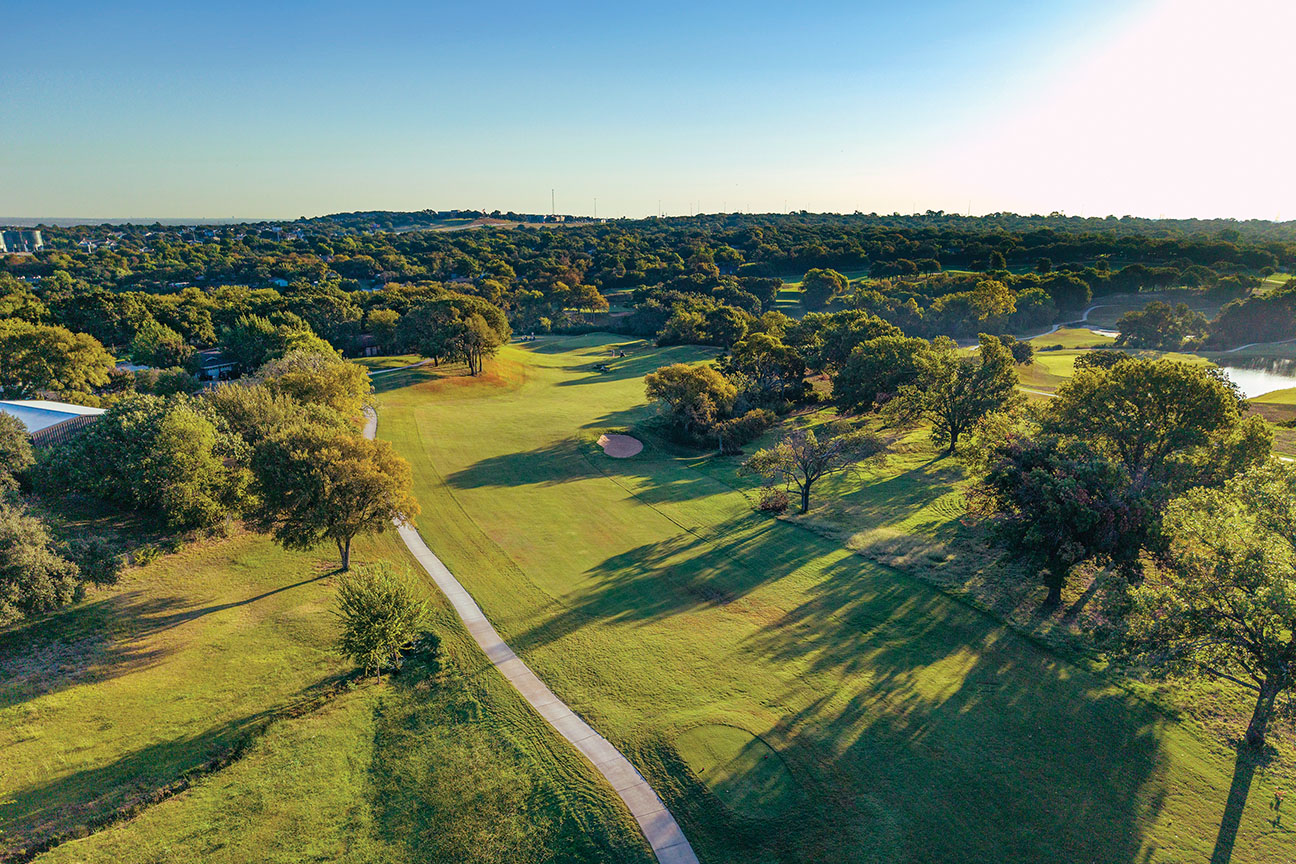
The opening hole trundles downhill on the northwest side of the property. If you are familiar with the old layout, the new first hole is essentially what used to be No. 9 but played in reverse. The green to this par five now sits about where the landing area was on the old No. 8. It’s a wonderful starting hole that requires a precision tee shot to avoid a large fairway bunker on the right side of the landing area. Find the fairway and longer hitters will have a mid-iron or even less into the green that plays significantly downhill. It’s a great chance for an opening birdie.
After the par 5 opener, players are greeted by the first par 3 of their round. This hole plays 165 yards from the tips, but the massive putting surface can yield a variety of yardages depending on pin placement. When pins are in the front, there is a significant hill left of the green that can send errant shots in that direction back onto the putting surface.
After the opening par 5, par 3, a pair of par 4s await at 394 yards and 373 yards respectively. No. 2 tee box sits near the pond that used to guard the right side of the landing area on No. 5. From there the hole plays straight away to the property line with the putting surface tucked in the corner near what was once the No. 6 green. No. 4 heads back the opposite way and is one of a handful of holes that channel some of the old Meadowbrook routing. It is almost the exact same as the previous No. 7. The old concrete-filled drainage ditch is gone, and a fairway bunker guards the left side of the fairway. The green features a large false front where balls will collect, making for tricky up-and-down attempts and two-putts.
The second par 3 of the opening nine comes at No. 5. Carved in the backside of the hill that used to serve as the teeing area for the old No. 5, this is an exceptional design by Colligan and Kemp. Playing uphill and usually in the predominant south wind, club selection is at a premium here. The deep green can add up to 40 yards to the number depending on pin placement. A bunker guards the green short, so be sure to choose enough club for the job.
Of all the holes at the new Meadowbrook, No. 6 might be the most unique. This monster par 5 is essentially what used to be the old par-5 No. 4 but played in reverse. The teeing area is near where the old No. 4 green used to sit, and the new putting surface sits in essentially the same footprint as the old No. 3 green. A huge fairway bunker on the right must be avoided, but the farther left you play to avoid it, the longer your second shot will be, regardless of whether you decide to lay-up or try to play for the green in two. This 580-yarder is the longest hole of the new layout, and usually will play into a southerly wind. Likely a three-shot hole for most, the lay-up shot requires precision, as missing right leaves an awkward third, and miss too far right and a small brook can swallow shots, adding strokes to your scorecard. Should a player want to be bold and make a play for the green in two, there is a landing area left of the green that isn’t noticeable from the upper fairway, meaning there is a little more room left of the green than it appears. This is one of the tougher holes on the course, and one that will certainly test even the best ball-strikers, especially when the breeze is up.
The par 4 7th hole is also a tough customer. At 454 yards from the tips, this hole crests a hill that used to serve as the fairway for No. 2. The hole winds gently uphill from tee to green, with a putting surface tucked into a grove of oaks. Miss left or long and you may not find your ball. An approach that comes up a little short and right leaves a good place to chip from, and a gentle slope of the green from front to back allows shots to chase deep onto the green, so be mindful to take some yardage off the number to account for the additional roll out.
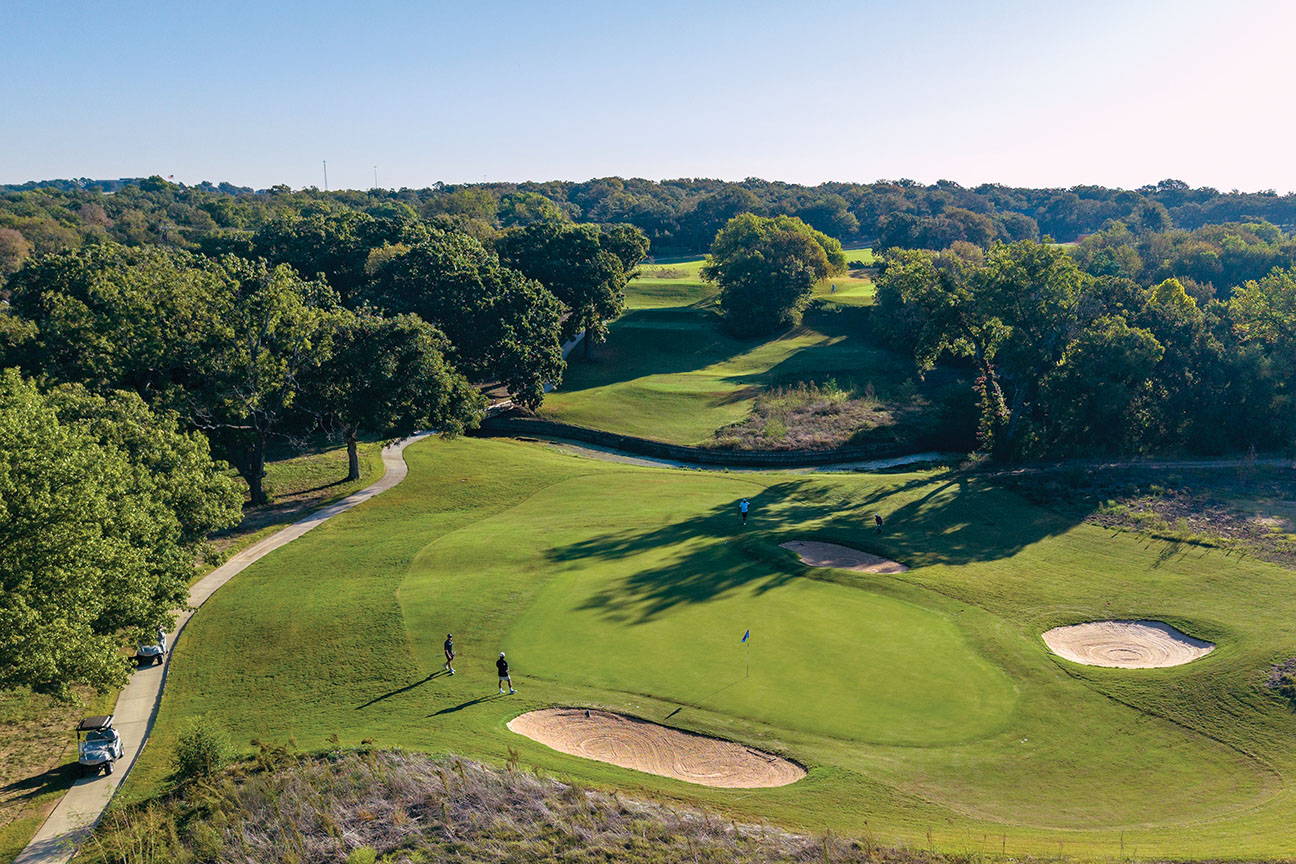
Of all the new holes at Meadowbrook, No. 8 may be the best. This downhill par 3 (there are three par 3s on the front and three more on the back) plays from the top of the hill where the second tee used to sit. The green sits below near the old lay-up area from the original par 5 first hole. The green is nestled into a natural amphitheater with a rock outcropping behind that frames the hole beautifully along with a trio of bunkers that guard the front and back. It’s a stunning par 3 and one that immediately entered the conversation as one of the most scenic in Metroplex daily fee golf.
After a short par 4 ninth hole that can yield a birdie, players navigate the final nine. This nine does feature a few more bones of the original layout, but with some twists and turns. No. 10 is really the one hole at Meadowbrook that didn’t change much. The green is shifted a bit from its original position, but for the most part, it’s the same.
No. 11 is also reminiscent of the original layout, but with the green shifted to the northern side of the pond that used to guard the old No. 11. A large hill to the left of the green can lead to some tough chip shots toward the water. The green at the new 11 is deep from front to back, so precise iron shots are at a premium.
The par 5 12th is also similar to the old look Meadowbrook with a couple wrinkles. The routing is similar, but the new blind tee shot makes this old par 4 a tough par 5 that will usually play into the southern breezes. The green complex still sits tucked into the southernmost point on the property. The additional yardage stretches this hole to 550-yards from the tips, making it tough even for those who can really move it off the tee.
After a short par 4 comes the longest par 3 at the new Meadowbrook. The remanence of what was once a short par 4 has been transformed into a 228-yard, uphill par 3 that features a mischievous green that can really make pars difficult, even when hitting the green in regulation. Pins placed in the back left of the green can add additional yardage, stretching this to one of the longer par 3s in DFW daily fee golf. It’s a difficult hole, but also very well designed.
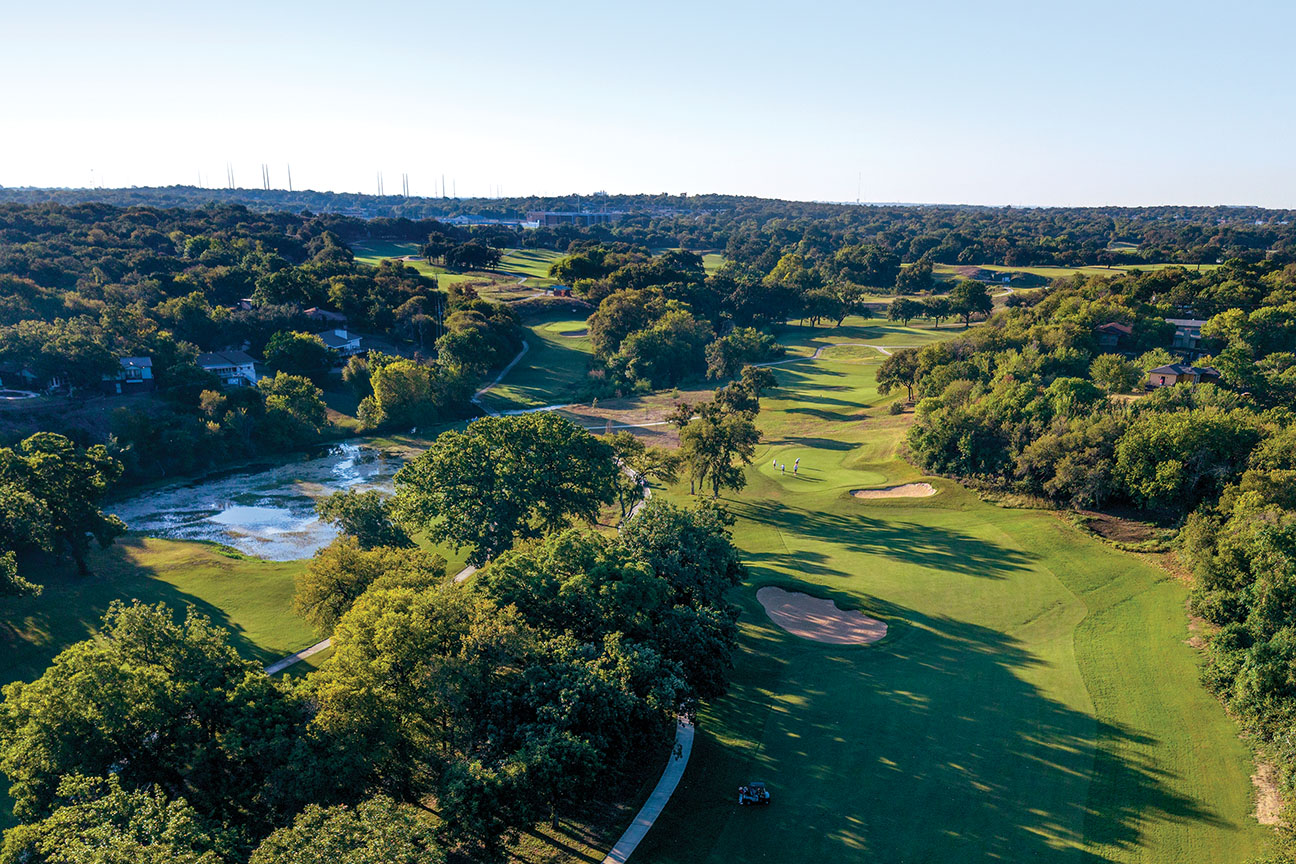
One of the most noticeable changes at Meadowbrook is the interior of the property, which has been cleared of many trees that once made this property feel a little claustrophobic. This is very evident as you tee off on the new No. 15, which sits in the middle of the property and offers a wonderful look at the rolling vista opened up by the removal of hundreds of trees and the addition of a large irrigation pond that sits to the left of the fairway and also guards the 16th green.
Speaking of 16, playing at 193 yards, this is another tough par 3 designed to test even the best ball strikers. A long, narrow green offers a more friendly place to set the pin up front but can quickly turn diabolical when shifted to the back-left, as a bunker and the pond short of the green can make it a true sucker pin. There is a little more room in that portion of the green than it looks like from the tee, but this hole will require your full attention.
No. 17 is one final par 5 that offers players a legitimate chance at a birdie. Playing just over 500-yards, a good tee shot that misses the center bunker in the fairway will leave longer hitters a great chance to reach this slightly elevated green in two. If you are familiar with the previous layout, No. 17 is basically the old No. 16 played in reverse. The green sits perched atop a hill near the property line where the No. 16 tee used to sit. There are some bunkers greenside that must be avoided, but two good shots will offer most players a chance at adding a circle on their scorecard.
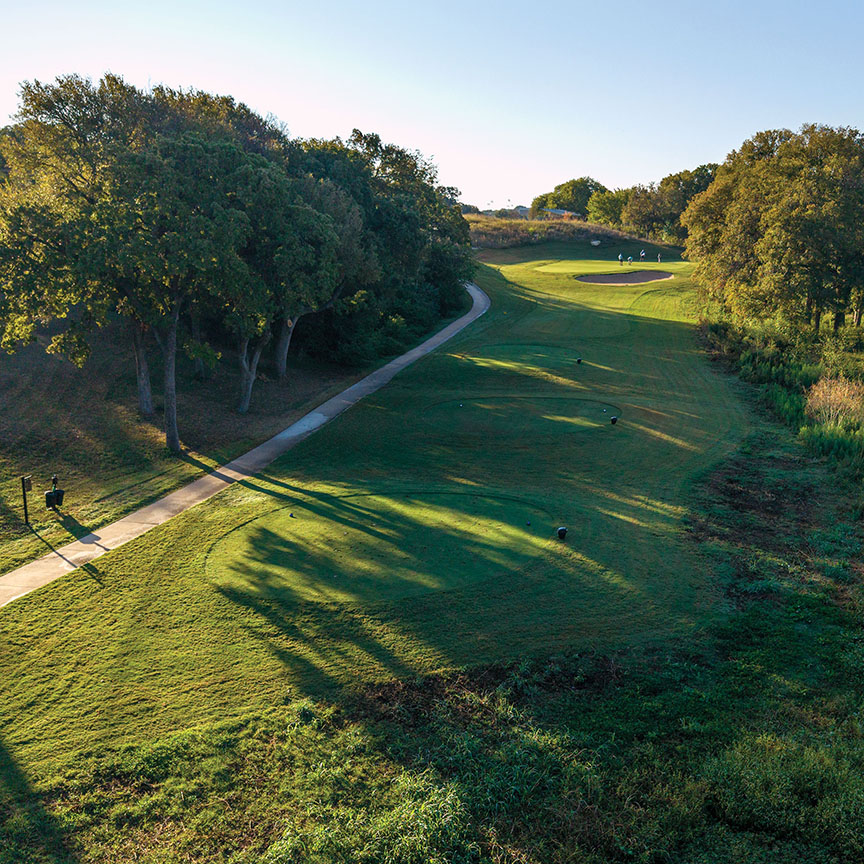
The final hole at Meadowbrook is a great test of golf. Playing back uphill to the clubhouse, the 456-yard par 4 18th sits atop the footprint of the old No. 15, only heading in the opposite direction. There is a massive fairway bunker that sits at the crest of the fairway. Longer players can test the bunker, but finding it likely means you’re bringing bogey or worse into the conversation. The good news is most days, the south winds blowing left to right will help push tee shots away from the massive trap, the bad news is the farther right you drift, the longer the approach. It’s a masterful finishing hole that isn’t tricked up but offers one final test for even the savviest players.
One thing I can say with certainty after playing the new Meadowbrook is it absolutely plays longer than the scorecard would suggest. Playing the one-in blue tees reads just 5,738, but I can assure you it plays significantly longer. The tips are listed at 6,400 but seem to play much closer to 7,000 with the long par 3s and rolling elevation changes. Speaking of those elevation changes, that is one thing that truly makes Meadowbrook special. It is such a magnificent piece of land, and Colligan and Kemp took full advantage. The bones of the old Meadowbrook are still there, but the new layout has so many dynamic elements carved into the flowing terrain, it’s hard not to love what they did.
Turf conditions continue to settle in, and in the weeks since they re-opened, the course is seeing historic numbers of rounds, which are taking their toll on the new tee boxes, but the agronomy team seems to be staying on top of things. Conditions are really solid, especially on the greens, which are rolling great. Come spring and early summer of 2026, I expect the course to be even better once it matures a bit.
The clubhouse at Meadowbrook remains unchanged, although there will be a proposal in an upcoming bond election to secure funding to renovate the interior. The Duck Bill Grill offers breakfast until 10:30, including a breakfast sandwich and breakfast burrito. After 10:30, you can build your own burger, or go for a cool, fresh club sandwich. Grab and go options include a standard dog or spice things up with a jalapeño sausage. And yes, they also have the best course snack there is … the Uncrustable.
Meadowbrook was always a fantastic piece of rolling property. In its final years before the renovation, conditions had become average at best, but the bones for a great layout remained. What Colligan and Kemp did is truly fantastic from stem to stern, and despite pumping millions into the property, the new Meadowbrook comes with a reasonable price tag sitting around $70 for premium tee times. Sure, the days of the $40 round at Meadowbrook are gone, but the new course is definitely worth the extra money, and with a little maturation, the layout should only continue to improve with time.
Taking all this into consideration, the renovated Meadowbrook should be added to your must play list now, and into the future.