
Rockwood Park Golf Course has been a Panther City institution since the 1930s. Originally designed by architect John Bredemus and later updated by Ralph Plummer, the layout once boasted a trio of nines. The red, white, and blue nines wove through the rolling topography between Jacksboro Highway and the West Fork of the Trinity River. Back in 2015, the course was once again reimagined by local architecture team John Colligan and his associate Trey Kemp. The result was a singular 18-hole layout, which eliminated several of the holes that used to make up the blue nine. The renovation project took close to two years to complete, and the course reopened in 2017. In the almost decade since, the course has become one of Fort Worth’s most popular tee times, with hundreds of players a week enjoying the 7,053-yard, par 72 layout.
After the course renovation was completed in 2017, a new clubhouse was added just a few years later, with 15,000 square feet of space, complete with a pro-shop and the Rockwood Grill, which offers cold beverages, wings, burgers, sandwiches or even a Nashville-style hot chicken sandwich. With the addition of the new clubhouse, the overall property has become a must-play for not only Fort Worth residents, but also for those who appreciate great course architecture and a welcoming atmosphere, all for a very reasonable green fee.
Speaking of that course architecture, the routing at Rockwood is fun, playable and has plenty of personality. If you are familiar with John Colligan’s design work, he offers the philosophy that “golf should be enjoyed, not endured.” Rockwood adheres to that with a design that offers plenty of chances at birdie, while leveling the playing field with some challenging tests along the way. The holes ebb and flow beautifully both with the terrain and in terms of difficulty. Fairways are mostly generous, and those that aren’t, tend to have subtle mounding on either side that can help funnel slightly wayward tee shots back into the short-grass. That’s not to say players can mail it anywhere, but slight misses aren’t generally punished. Bunkering is strategic, without being overly complicated, and most sand traps frame the holes nicely. There isn’t a lot of water, but the water that comes into play can rapidly crater rounds if not avoided.
After an opening par 4, the par 5 2nd hole offers players their first real decision of the round. Playing at 533 yards from the tips or a more user friendly 504 from the one-in blue tees, this hole can yield a birdie with a good tee shot. Water guards the green short and right, but those who can manage a high fade can hold the narrow green and have a chance to roll in a two-putt birdie. Laying up is also fine, should you want to leave a precise wedge number. It’s a good early test, but with some course knowledge, it can offer a chance to get off to a good start.

No. 3 is one of the more scenic holes on the course, not necessarily for its architectural elements, but for its visual appeal. A short par 4, this hole looks toward downtown, with views of Pioneer Tower, the courthouse and other landmark buildings in the city. It’s a great spot to stop for a photo with your group.
The following hole is the second par 5 of the opening nine. Years ago on the old blue nine, there was a 600+ yard par 5, which at the time was one of the longest par 5s in the state. When Colligan reimagined the course, one of the stipulations from the city was that there needed to be another 600-yard par 5 on the scorecard. No. 4 checks that box, playing 611 yards, and is, without a doubt, one of the toughest holes on the course. It’s narrow off the tee, and then opens up to a dogleg right that features water all down the right. The multi-tiered green also serves as a challenge. It’s tough enough that they really should offer a free drink in the clubhouse to anyone who cards a four.
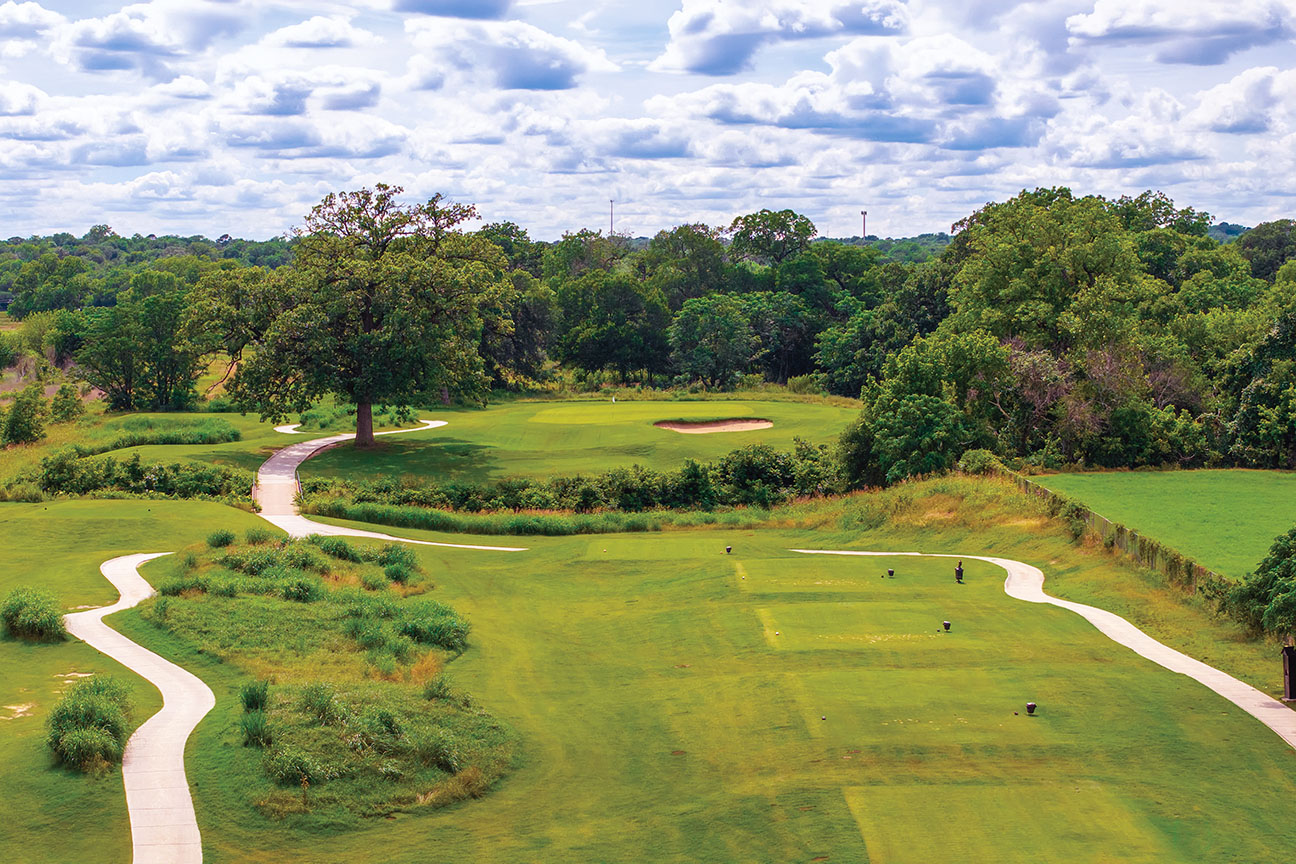
No. 7 is another risk-reward hole on the outward nine. For those who played the old-school Rock, this uphill, short par four is essentially the old red nine No. 2 played in reverse. The hole works back toward Jacksboro Highway and features a pseudo-split fairway. Bunkers litter the landing zone, so precision and firepower are necessary. The hole plays just 311 from the tips, meaning longer hitters can chase something up close to, or even on the putting surface. A more conservative route to the left offers a more generous landing area, but leaves an awkward pitch shot. It’s one of the most interesting holes on the front nine.
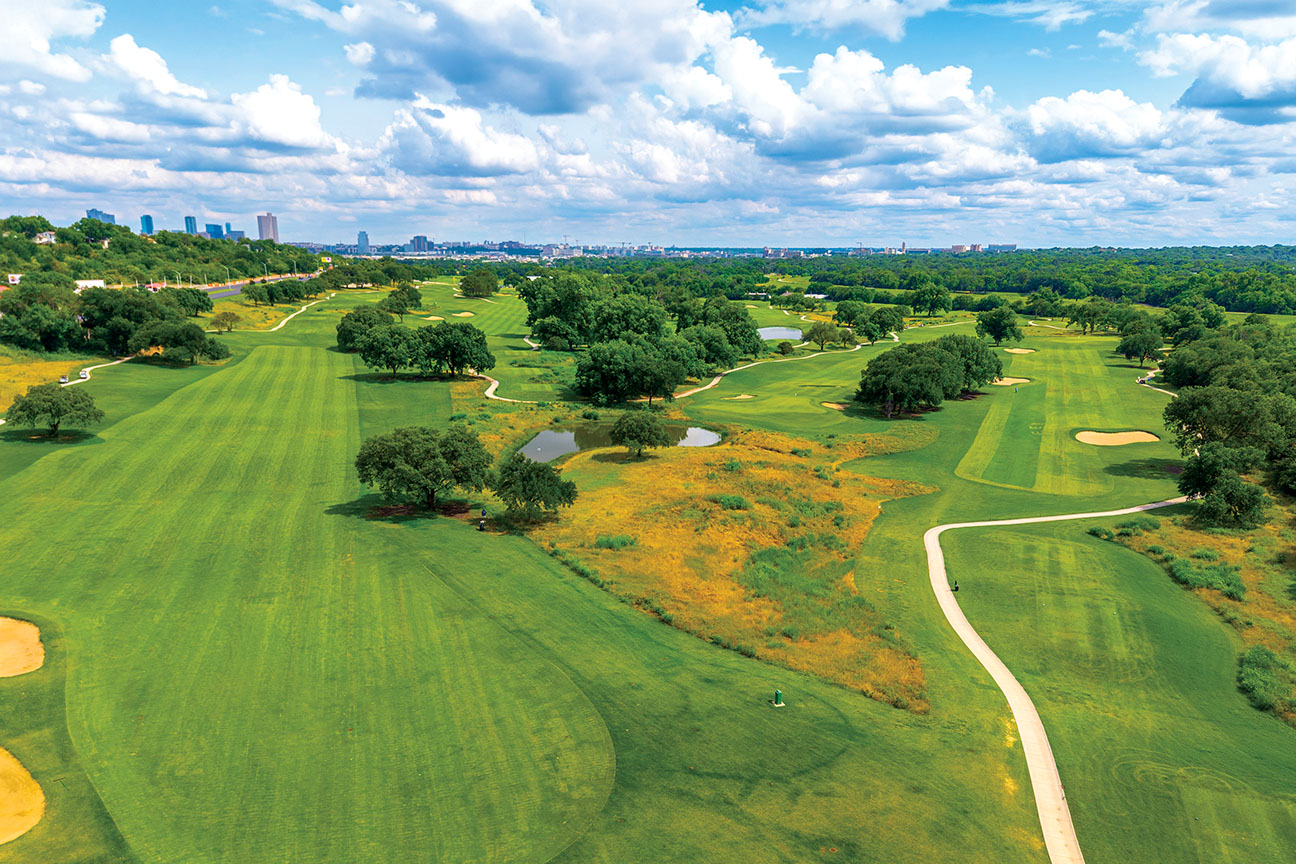
The final nine at Rockwood offers another solid test of golf with some great opportunities to yield a tweeter or two. No. 10 is a slight dogleg right with a grove of trees on the right and a small creek on the left that funnels into a pond that cuts into the fairway and continues up to the left side of the putting surface. Big hitters can run the risk of finding this pond off the tee if they keep it a little too far left. Finding the fairway is just the beginning, as this three-tiered green can be tough to read. Players need to find the proper tier where the hole is cut to have a legitimate chance to knock down a putt.
The stretch of No. 12 through No. 15 is arguably the most dynamic stretch on the golf course. The 233-yard par 3 begins this adventure, with a shot that is tough for even the most skilled ball-strikers. A large bunker patrols the front left, so pins cut in the middle or left are well protected. Luckily, Colligan and Kemp added a workaround for players who don’t want to take the traditional route. A hill on the right can be utilized to send balls down to the putting surface and assist in chasing them closer to the hole. It’s a creative design element that can make a long par 3 more enjoyable for those who maybe aren’t as proficient with a long iron or hybrid.
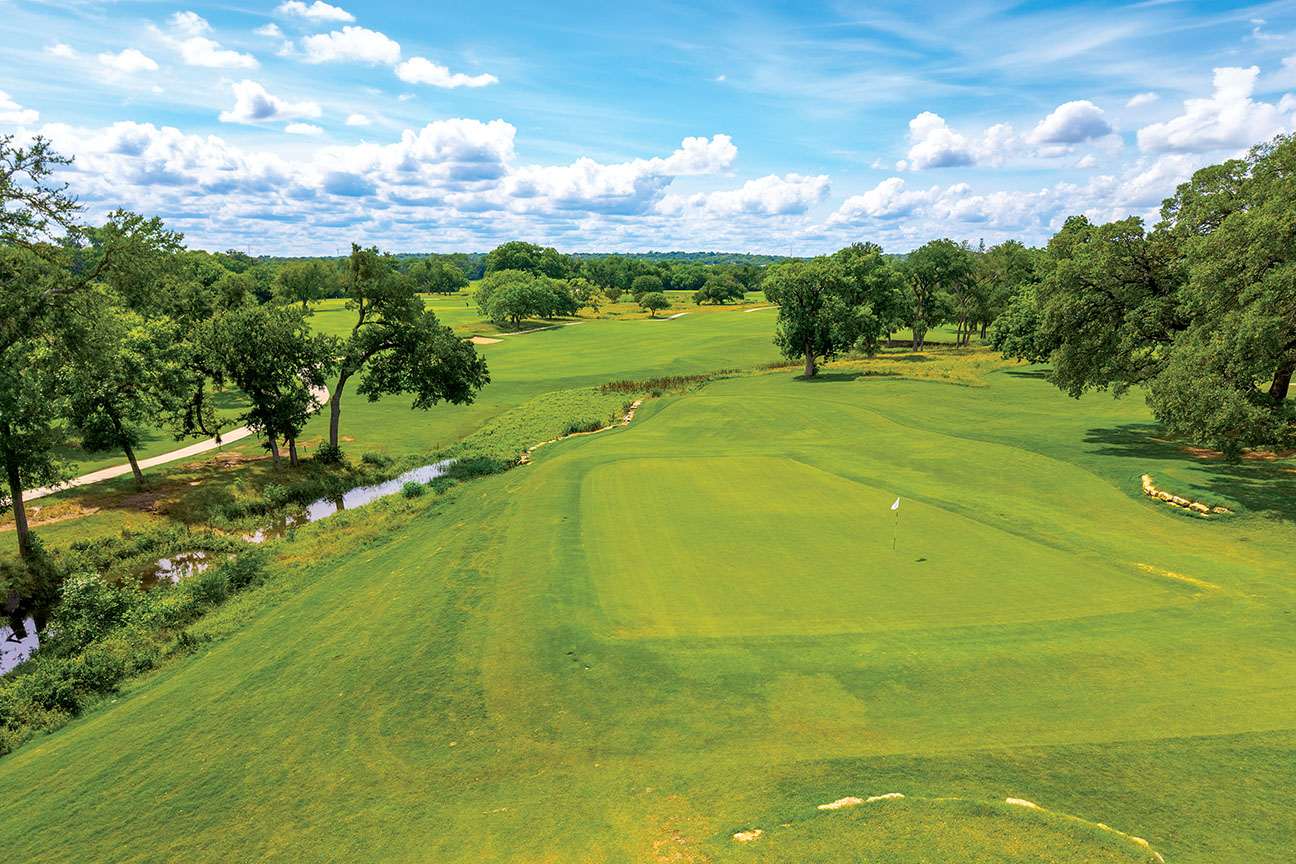
If you have reached this point in the round and still have yet to make a birdie, then No. 13 is a great chance. This par 5 plays 540 from the tips, but only 492 from the blue tees. This hole is also almost always riding the prevailing south winds, making it play a little shorter than it reads. Long hitters can be left with just an iron into the green, but tucked left pins can be hard to fire toward, as the green narrows on that side. Four bunkers guard the landing zone short of the green and present a very challenging mid-distance bunker shot when found. A healthy bailout area is available right of the putting surface, which will leave a manageable pitch and putt attempt at birdie.
No. 14 is one of the tougher holes on the golf course. As we mentioned, the ebbs and flows of the difficulty of holes make this a fun layout. No. 13 and No. 14 back-to-back is a great example. The 14th tee shot is tough, usually battling a quartering wind off the left wind that pushes left to right balls toward out-of-bounds while also chewing off carry distance. However, Colligan did add gentle slopes to the sides of the fairway, helping marginal tee shots gently trickle back into the fairway. A long approach shot will likely remain to an table-topped green that can be difficult to hold. Should you be fortunate enough to make birdie on No. 13, it can be tough to not give it right back on No. 14. Par here is a good score.
The final par 3 of the round is one of the few holes remaining intact from the old Rockwood layout. No. 2 of the old blue nine is basically the hole players face at 15. Playing a muscular 212 from the tips, this shot is almost all carry over a tributary of the Trinity River, with a bunker lying short of the green. It is undoubtedly one of the most intimidating tee shots of the round, and depending on wind conditions, can be very tough to judge, as surrounding trees and the levee to the Trinity off to the left can lead to swirling breezes.
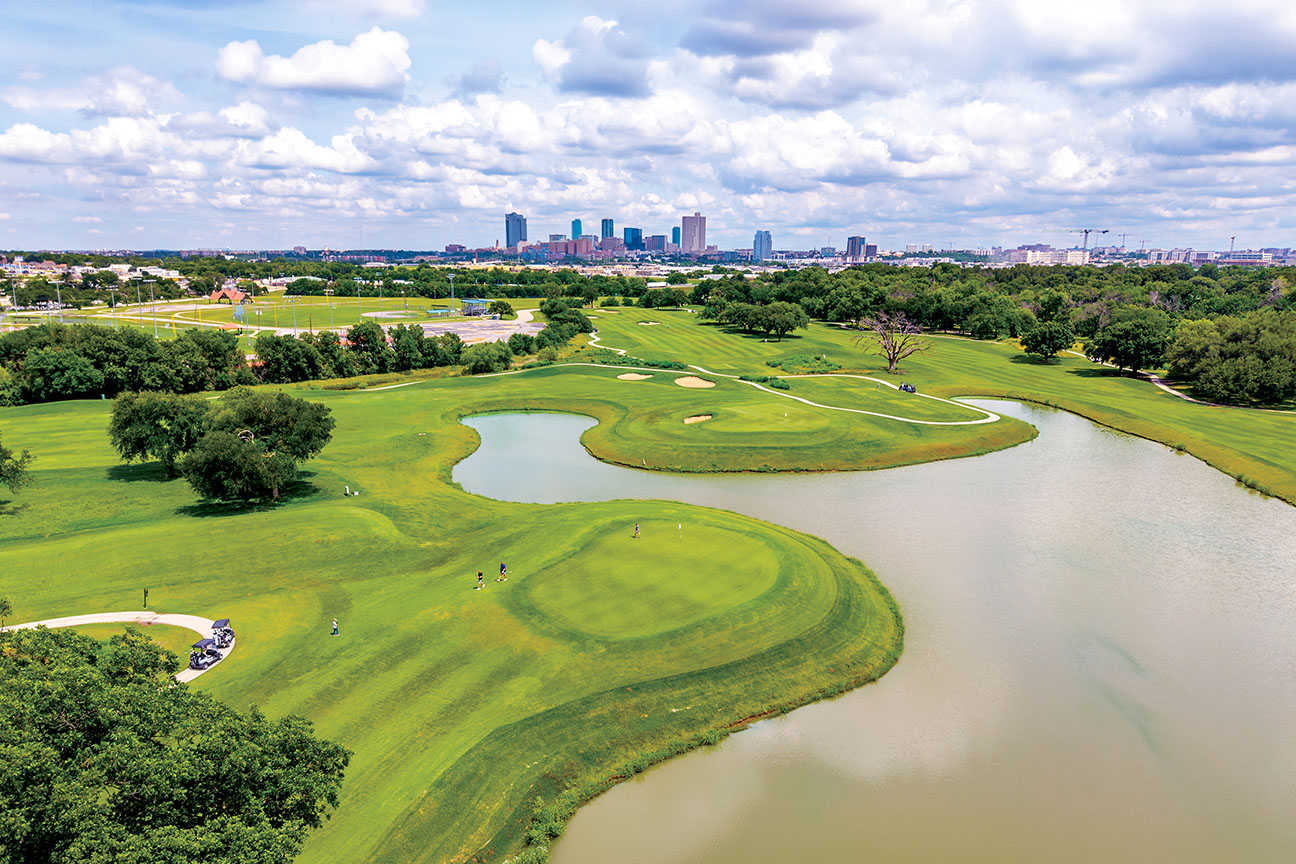
After two final par 4s, the final hole at Rockwood is a great crescendo to this Fort Worth muni. The uphill par 5 18th will almost always play into the breeze, as it faces back to the south. One thing to note here is the alignment of the tee box, which aims players left of the intended target and toward a pair of fairway bunkers. This will almost certainly be a three-shot hole for anyone but the longest hitters. For those laying up, be aware of the cross-bunkers that appear greenside, but actually sit about 40 yards short of the putting surface. One other fun nugget of information about No. 18 is the green itself. It is a perfect circle. Don’t believe it? Jump on Google Earth and check out the satellite view.
From start to finish, Rockwood is one of the most enjoyable layouts in the area. It has some teeth, but also has a lot of great chances to score. It’s a course that can offer up some scores if you are hitting it well, but not decimate your confidence if you didn’t happen to bring your “A” game. Conditions are for the most part well above average, and with their rock-solid clubhouse, this is a Fort Worth municipal that should be in your regular rotation.