
Names like Gil Hanse, Bill Coore, Ben Crenshaw and Tom Doak are likely familiar to those who fancy golf architecture in Texas. Hanse has been a part of several projects in the Lone Star state, including a recent renovation at Colonial Country Club and the Fields Ranch East Course at PGA Frisco. Doak is the architect of the brand-new course at Wild Spring Dunes, which will fully open later this year, and Texans are, of course, well aware of Coore and Crenshaw’s work on projects such as Trinity Forest, Barton Creek and the upcoming second course at Wild Spring Dunes. Texans may be less familiar, with the name David McLay Kidd.

The son of a course superintendent, this Scot grew up helping with simple agronomy chores around his father’s club. His passion for the game grew, and after attending the prestigious Writtle College on the outskirts of London, where he studied horticulture and landscape design, McLay Kidd found himself working as an apprentice for the construction firm Southern Golf and later as an associate with Swan Golf Designs. Still in his 20s, Gleneagles Golf Developments hired the young talent in 1991. His role at Gleneagles involved traveling to examine potential sites for resort development. Just three years later, Mike Keiser, founder of Dream Golf, hired McLay Kidd to design the first course at the now world-renowned Bandon Dunes Golf Resort.
In the years since, Bandon has become a must-visit destination for golfers from across the planet. Kidd’s design work at Bandon Dunes brought more work and the creation of DMK Golf Designs. In the last quarter century, Kidd has been the brains behind some of the most celebrated architecture in the game, with courses like Nanea, Machrihanish Dunes, Gamble Sands, Tetherow and Mammoth Dunes.
Until just a couple of years ago, Kidd had never brought his talented eye and unique architecture philosophy to the state of Texas. That is … until he was approached about an opportunity in the Hill Country at a site that overlooks Lake Travis and the Pedernales River. Loraloma took shape over the months that followed and opened to members in October 2025 to rave reviews, with majestic vistas, 100-foot ravines and dramatic elevation changes.
DMK spoke to AVIDGOLFER about his first course in the Lone Star State, his ever-expanding architecture pedigree, and approach to design work across the globe.
Let’s talk a little bit about your project down at Loraloma.
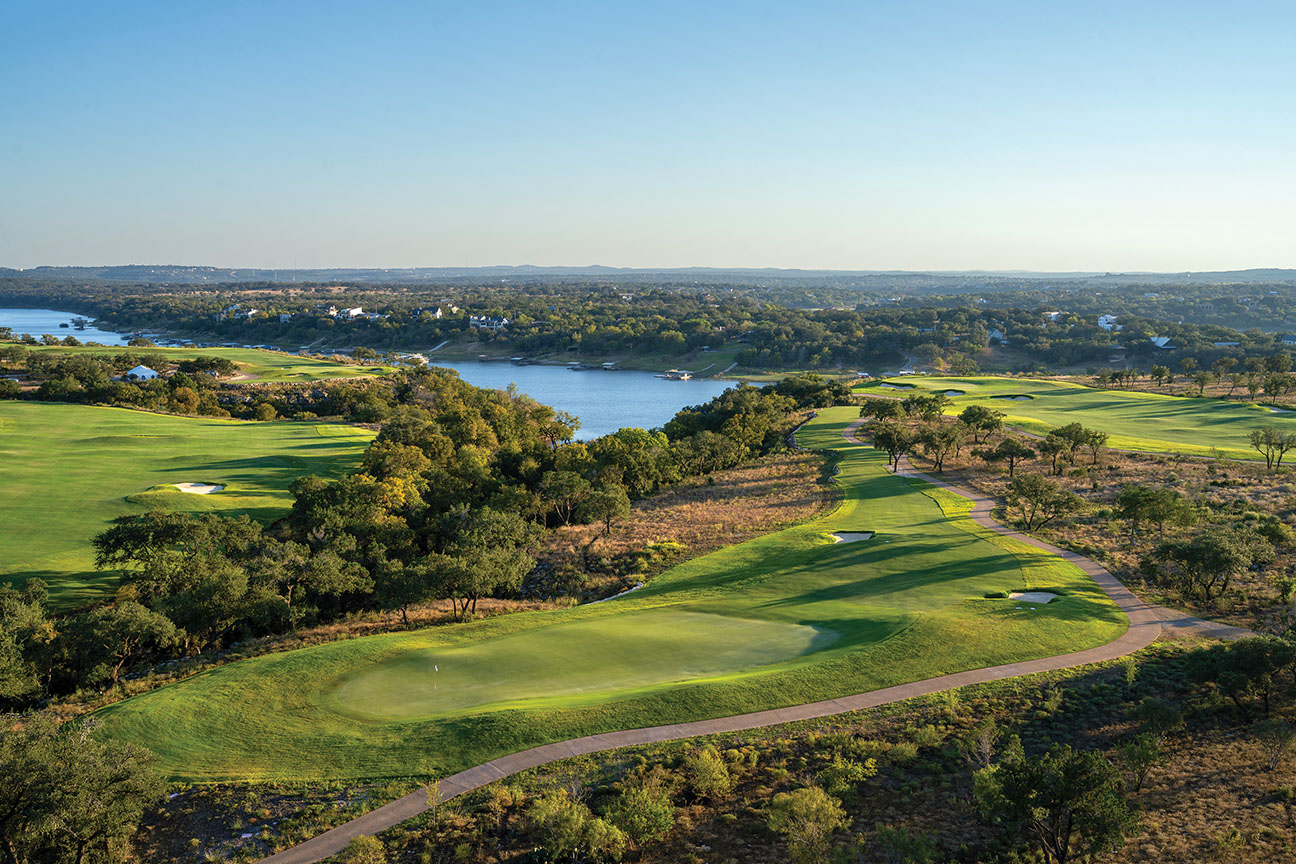
It’s not predictable golf. It really fits into its landscape well. I like to feel like I only work on unicorns. That is what I’m after. I love sites that are very unique and that means that they’re pretty rare. With Loraloma, we had a site that sits along the cliff tops of Lake Travis and the Pedernales River. We also have a developer that has a very high golf IQ. They intuitively knew that if we sacrificed the quality of the golf, we would ultimately sacrifice the quality of the entire development. They let me use the very best of the land, the cliff tops with the views of the water to build Loraloma. I think 12 of the holes are along the cliffs edge and play over gulches and canyons and cliff tops. There are a number of holes where if you really miss, you can see your balls splash in the water 80 feet below you.
As an architect, how challenging is it whenever you go from terrain to terrain? Loraloma is built on the cliffs near Lake Travis, Tetherow is high desert, Gamble Sands is a unique piece of property, and you’re doing some work at Streamsong. How do you transition from one terrain to the next, and how challenging is that as a course designer?
Yeah, the site is always our inspiration. I think some architects are less influenced by the site and they bring their bag of design tools and tricks, and they apply them to every site in the same way. I’d like to think that we’re far more influenced by the sites. We spend a lot of time and I personally spend a lot of time tracking down these unicorns. It would be a shame to kill the unicorn and turn it into a cow. So, we’re aiming to take that unicorn and give it sparkles.
When you refer to a site as a unicorn, what do you mean exactly?
We want to take a great site and not diminish it by creating a great golf course on top of it. And to be honest, every site is a unique unicorn. They all have different attributes.
They’re not the same. For example, Loraloma has very specific things that made that site compelling and unique. You know, the old growth oak trees that are on it, the rumpled topography that had never been farmed, and obviously the great views out across the Texas Hill Country. All these things combine to make a very compelling and unique site that allowed us to lay a golf course on top of it with a gentle hand. We didn’t impose our will upon the site but allowed the site to impose its will upon the golf course.
Fair to say you didn’t spend a lot of time shaping the course if the topography presented that much character?
Our intention was to allow the Texas Hill Country to speak for itself and celebrate the very best of it. We didn’t move gobs of dirt. We allowed the pitching, rolling terrain that’s out there to stay there. We found ways of placing golf holes across it that were beautiful, fun, intriguing and mysterious. The last thing we want is predictable. We definitely didn’t want to build a 400-yard par 4 down through a valley with bunkers on the inside of the dogleg and two bunkers either side of the green. Shoot me if I ever build that hole.
What does the process look like from your initial site visit, through the design work to completed product?
If you find a really good site, you’re not doing a vast amount of design work prior to starting construction. You’re designing the basic foundational tenets of the design.
Where are the holes going? Where do we need to consider drainage issues? Where do we have to put bridges? How will irrigation work? We have to be able to answer those questions before we start construction. On the other hand, where is a tee? How high is a tee? Exactly what are the features of a fairway or a bunker or a green? None of that needs to be answered prior to construction. What we’re really paying attention to are things like installing major infrastructure like bridges and how are we dealing with storm water … which can be a major issue in the Hill Country.
And how does your team come together to process all of these elements?
We’re like a jam band. We’ve all got our instruments to play and there’s usually a Lennon and McCartney at the head of the troop. We set the rhythm and then somebody else jumps in with some other idea, and we think that idea is cool, it can change. Then you start adding lyrics and bass lines, and before you know it, the golf hole starts to appear, and even we aren’t quite sure who designed it. Maybe some of the tracks are entirely me, but maybe some of the tracks aren’t me at all.
You talk about the land inspiring you. What are some of the classical golf course architecture elements that inspire you? You hear a lot of golf course designers now and they want to include a redan green or a Biarritz green. You see a lot of that sneaking into modern golf course architecture, especially renovation work. Are these necessary elements in modern design? What do you think?
That’s the whole conversation by itself. Is the use the rampant use of template holes good for golf? I don’t know, maybe if they’re done well. Is it creative architecture? I can’t think that it is. It’s not unique. If it doesn’t fit the site sometimes it can end up being somewhat generic.
So, for me, we rarely use template holes as the beginning point of an idea. It doesn’t mean that we don’t do it. It just means that it’s not It’s not our go-to. I know what all of those are, and we could build a golf course with those holes and barely ever visit it. I can send my team with a list of template holes and say, here, build these. I much prefer finding ways of applying unique and creative ideas to the site, which takes a little more effort.
Golf in Texas is red hot right now. You just finished Loraloma. We’ve also got Bluejack Ranch, Maverick Ranch, Wild Spring Dunes, Childress Hall and a whole bunch of others in the works or that have just opened. Is it cool to get to work in Texas for the first time in a state that seems to be on the rise when it comes to high end golf courses?
You know, it’s very weird when you look at the top 100 list where the golf courses exist. Do you know which state has the most top 100 public golf courses? I saw this the other day … it’s Wisconsin. Who would ever have thought that? Anwd if you look at where the greatest number of major champions have come from, my I guess is probably Texas, and yet when you think about the quality of the golf in Texas up until relatively recently, the biggest state in the lower 48 has had the least number of top 100s. The golf IQ and the golf ability of its population has been really, really high, and yet the golf course quality has been relatively low. So, I really think Texas was due and I’m thrilled to be a part of that. Hopefully we built a course that is unique and stands the test of time.

When you discuss the Mount Rushmore of modern architecture, there are only a few names that come to mind. Gil Hanse, Bill Coore and Ben Crenshaw, Tom Doak, and there are a lot of architecture buffs that would add David McLay Kidd to that list. You are working on a new course at Streamsong that will add a fourth 18 to that incredible property. The others were designed by the gentlemen I mentioned. Is it a point of pride for you to be able to go down there and add another course to Streamsong with those architects?
Well, most of them came to Bandon and worked with me. So, I hope that was a source of pride for them [laughs] … but sure. It’s the first place where all four of us have had courses on the same property. Gil hasn’t worked at Bandon, and I haven’t worked at some of the others they have. There are plenty of places where three of the four of us have worked before, but none of where all four of us have been on the same spot. So, Streamsong becomes a great opportunity for golfers to go play courses from all four. I think our course fits in really well with the other three.
When it comes to modern architecture, if there’s one thing that you absolutely love that you have to add when you design a golf course versus one thing maybe you wish no one would ever do again. What would those two things be?
The thing I wish we could do away with is running eight miles of eight-foot white concrete cart paths around a golf course. That is just a romance killer right there. You know, it’s very hard to build something that looks really cool when you run a cart path around it. I wish that weren’t a reality, but it often is, you know, it’s very difficult to get away from it in a lot of situations, but that doesn’t mean I like it. I would still rather not do it. And what do I want to do every single time? I want to figure out how to make a ball bounce? Simple as that, if the ball bounces, then the ball rolls. If the ball bounces and rolls, then you’re playing golf as it was meant to be.
If it doesn’t bounce and roll, you’re playing a two-dimensional game. That is not golf. That’s just lawn darts.
How much of that philosophy do you think comes from being from across the pond and playing that style of golf?
Well, we invented the game, so I think that gives us some good ideas.