
Author’s Note: Happy New Year all. This one’s fodder for your funny bone!
We invited all 50 U.S. states to submit their cases for being America’s premier golf destination. Here’s what we’ve received so far. No winners yet — we’re still reading.
Florida’s Submission (Received first, marked “URGENT”)
Florida would like the panel to it has well over 1,000 golf courses. The state included a 47-page appendix with GPS coordinates for each one. The submission notes that if you played one Florida course per day, it would take 3.97 years, “assuming no hurricane delays.”
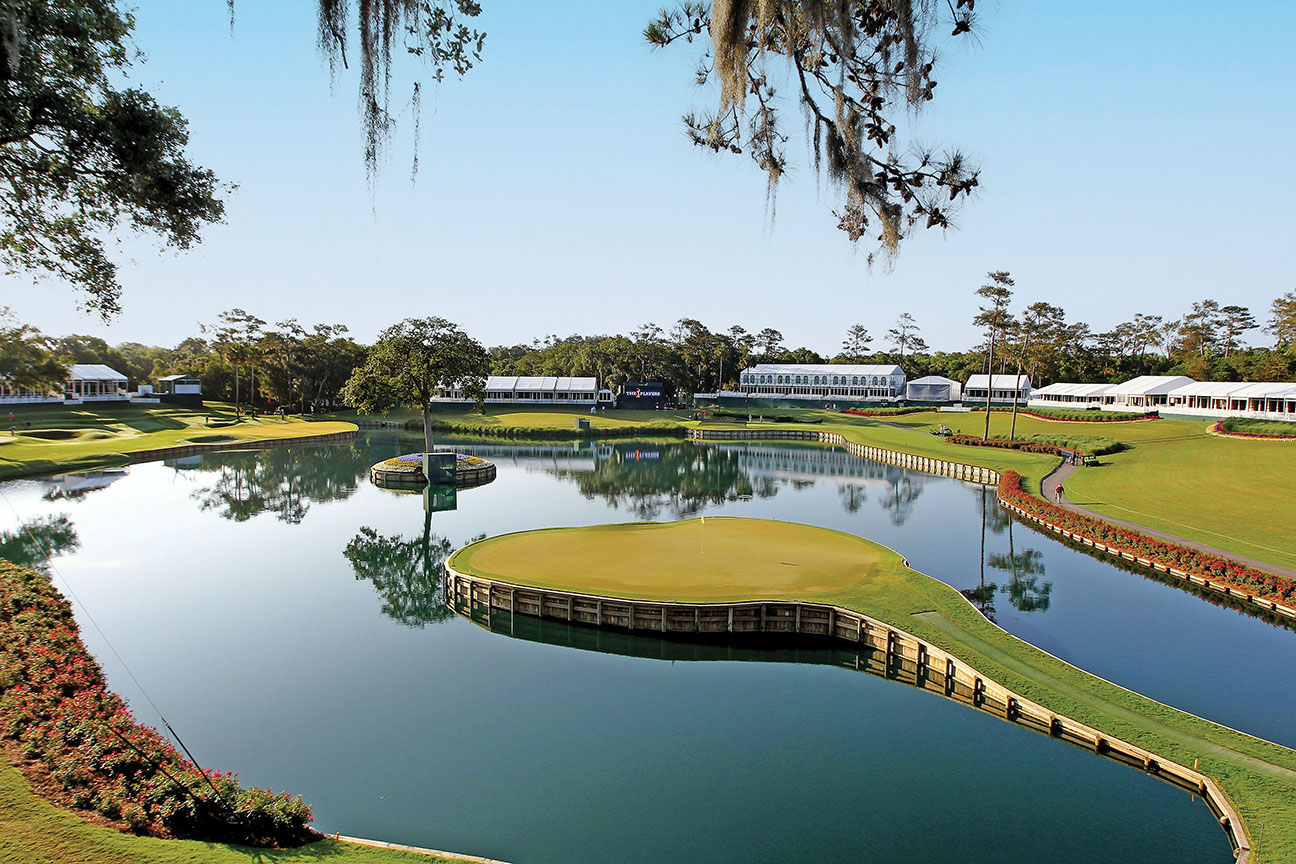
The state points out that Palm Beach County alone has more golf courses (~160) than 43 entire states. The submission includes a helpful chart showing that a resident standing anywhere in Palm Beach County is, on average, 2.7 miles from the nearest golf course, which Florida describes as “optimal golf accessibility using standard Euclidean distance measurements.”
Florida also wishes to emphasize that The Players Championship purse reached $25 million in 2025, and that TPC Sawgrass’s island-green 17th hole has a green surface area of precisely 3,912 square feet. “That’s 0.0898 acres of terror,” the submission notes, with unusual specificity.
They close with: “Also, we invented retirement golf.”
Arizona’s Submission (Printed on 115°F-resistant paper)
Arizona’s entry opens with: “Did you know the average temperature during our golf season is 72°F?” There’s an asterisk. The footnote reads: “*Golf season defined as November through March.”
The state reports 337 courses and notes that Scottsdale has more courses per capita than any U.S. city except… they’ve trailed off here and drawn an arrow to a second footnote: “We stopped researching after we won this category.”
Arizona emphasizes that its rough requires only 18 inches of annual rainfall to maintain, compared to Florida’s 54 inches. “That’s 66.7 percent less water dependency,” the submission states. “We’re not saying Florida is wasteful, but.” The sentence ends there.
Arizona also includes photographs of saguaro cacti on golf courses with the caption: “Show us another state where a 40-foot tall, 2,000-pound succulent is a regular course hazard. We’ll wait.”
The submission notes the Phoenix Open drew 720,000 spectators in 2024, then added: “That’s more people than live in Wyoming. Not relevant. Just interesting.”
North Carolina’s Submission (Bound in pine needles)
North Carolina opens by noting they have 532 golf courses, then immediately pivots: “But let’s talk about Pinehurst.”
The remained of the submission is essentially about Pinehurst. The states mentions that Pinehurst No. 2 has hosted four U.S. Opens (1999, 2005, 2014, 2024) and will host the 2029, 2035, 2041, and 2047 championships. “We have U.S. Opens scheduled for when today’s toddlers are middle-aged,” the submission observes.
The state notes that Pinehurst Resort has nine courses on property, and that the village of Pinehurst (population 17,581 as of 2023) has 40 golf courses within 15 miles. “That’s 2.27 courses per thousand residents, which is more courses per capita than Palm Beach County,” they write, with a footnote: “See Florida’s submission, page 23.”
North Carolina also mentions they’ve produced tour pros including Webb Simpson, Scott Hoch, and Davis Love III, then adds: “Also, both Michael Jordan AND Steph Curry played college basketball here. Unrelated to golf but supports our general excellence thesis.”
California’s Submission (Delivered via Tesla)
California’s submission is organized into subsections labeled “Northern California” and “Southern California,” which appear to have been written by different people who don’t communicate.
The Northern California section emphasizes Pebble Beach ($575 greens fee in 2025), notes it has hosted six U.S. Opens, and describes the 7th hole as “106 yards of cliff-adjacent perfection.” The submission also notes that Pebble Beach’s slope rating of 145 from the championship tees represents “a 7.6% increase in difficulty versus the average championship course.”
Southern California’s section focuses on having 516 courses and notes that Torrey Pines hosted both the 2008 U.S. Open (where Tiger Woods won on a broken leg) and the 2021 U.S. Open. The submission includes the biomechanical detail that Woods averaged 302.3 yards per drive on his fractured tibia, “demonstrating that California courses inspire performance that defies orthopedic medicine.”
Both sections agree on one point: “We have ideal golf weather.” Southern California defines this as “325 days per year.” Northern California defines it as “273 days per year.” Neither acknowledges the discrepancy.
Texas’s Submission (Everything’s bigger, including the document)
Texas reports 956 golf courses across 268,596 square miles, which the state notes is “more golf courses than Florida has Waffle Houses.” The submission includes a map showing that Texas is larger than all of New England, New York, Pennsylvania, Ohio, and Illinois combined, “meaning we have room for more courses, should this become relevant.”
The state emphasizes that Colonial Country Club in Fort Worth has hosted 77 PGA Tour events, including 74 consecutive years (1946-2019) of what became the Charles Schwab Challenge. “That’s longer than Florida has been air-conditioned,” the submission notes.

Texas also mentions they’ve produced Justin Leonard, Jordan Spieth, Hunter Mahan, and Scottie Scheffler, then adds: “Scheffler achieved a stroke average of 68.65 in 2024, which is 1.8 strokes better than the tour average. We’re not saying Texas coaching is superior. We’re saying Scottie Scheffler is from Texas.”
South Carolina’s Submission (Smells like sea breeze)
South Carolina wants everyone to know it has 379 golf courses, with special emphasis on Hilton Head Island’s 32 courses on 69 square miles. “That’s 0.464 courses per square mile, which creates what we call ‘golf density.’”
The submission focuses heavily on the Heritage Classic at Harbour Town Golf Links, noting the famous lighthouse and the par-4 18th hole that plays 478 yards into the prevailing wind. “Average scores on this hole during tournament play: 4.24. It’s a par 4 that plays like a par 4.24. Precision.”
South Carolina also highlights Kiawah Island’s Ocean Course, site of the 2012 and 2021 PGA Championships, and note that seven holes play directly along the Atlantic Ocean. The submission includes tidal charts showing that the wind direction shifts during 47 percent of rounds, “making course management a dynamic meteorological challenge.”
South Carolina closes with: “Also, our moss is superior.”
Hawaii’s Submission (Arrived three days late, blamed trade winds)
Hawaii’s opening line reads: “We are 2,390 miles from California. Golf tourism requires commitment.”
The state reports 73 courses across six islands and notes that Mauna Kea Golf Course on the Big Island sits at sea level but is played against the backdrop of a 13,796-foot dormant volcano. “Altitude differential from tee box to background: maximum in U.S. golf.”
Hawaii emphasizes that Kapalua’s Plantation Course, home of the Sentry Tournament of Champions, has the longest hole on the PGA Tour: the 663-yard par-5 18th. “At sea level, thin air is not a factor. This is pure distance.”

The submission also notes that Hawaiian golf courses operate in USDA Hardiness Zones 11-12, “meaning our turf grass species (Bermuda and Seashore Paspalum) photosynthesize year-round at optimal rates. No dormancy. Zero.”
They close with: “Also, whale watching during your round. No other state offers this.”
Michigan’s Submission (Written in Comic Sans)
Michigan cheerfully reports 647 golf courses and notes they rank sixth nationally in total courses. The submission pivots immediately: “But let’s discuss seasonality.”
The state explains that its golf season averages 157 days (late April through mid-October), creating what they call “concentrated golf enthusiasm.” During peak season, Michigan golfers play at 2.4 times the national average frequency, “making Michigan golfers more dedicated by mathematical necessity.”
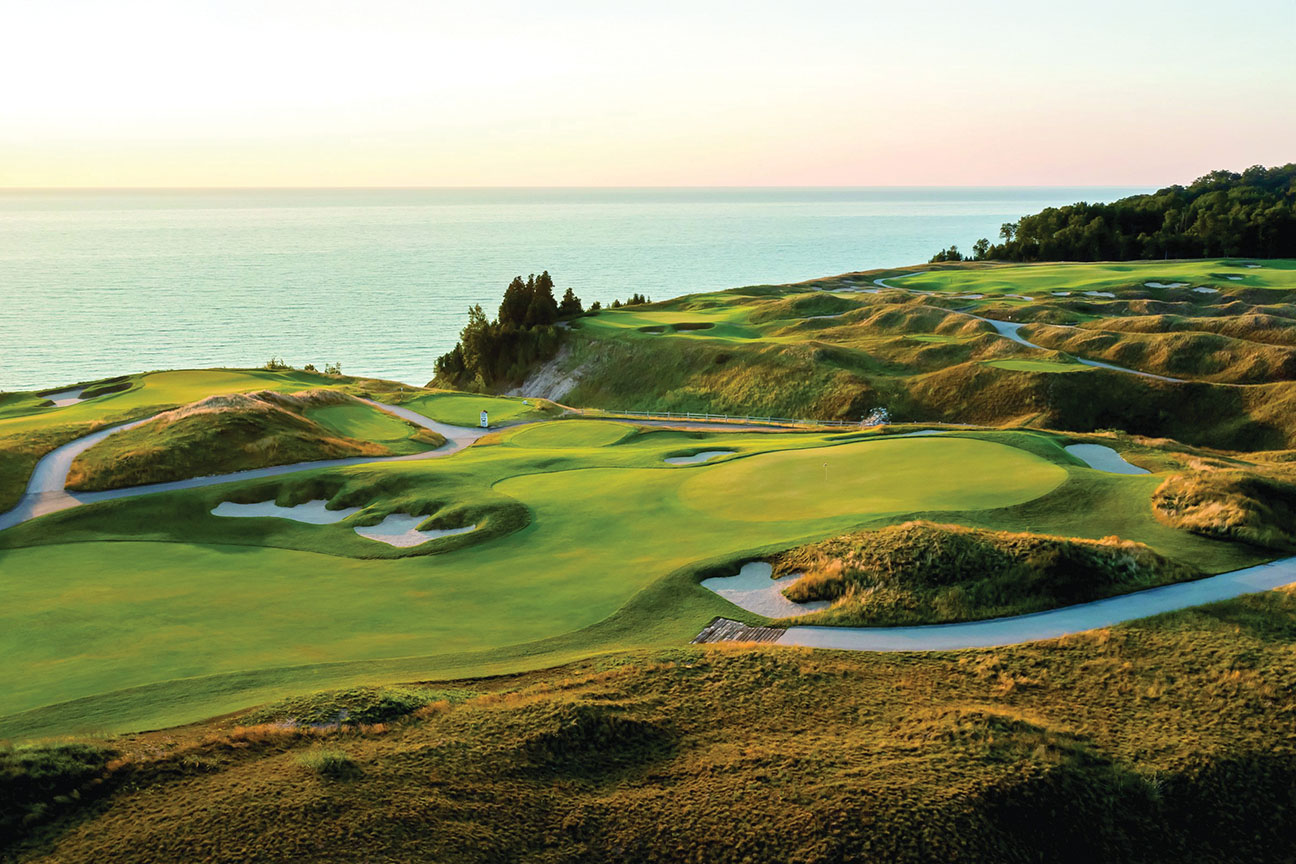
Michigan emphasizes Arcadia Bluffs, which sits on Lake Michigan bluffs rising 200 feet above the water. The submission includes topographical data showing the course’s elevation changes total 287 feet over 18 holes, “creating what our submissions committee calls ‘vertical golf.’”
They mention that Michigan produces more golf balls annually than any other state (via Titleist and Callaway manufacturing facilities), then add: “We make the balls. Other states just hit them.”
Alaska’s Submission (One page)
Alaska’s entire submission reads: “We have nine golf courses. You can golf at midnight in June due to our latitude (61-71°N). Our courses have moose. Your move, Florida.”
North Dakota’s Submission (Surprisingly detailed)
North Dakota reports 110 courses and opens with: “We understand the initial skepticism.”
The submission notes that during North Dakota’s golf season (May-September), the state receives 15.2 hours of daylight per day on average, “allowing for extended rounds without artificial lighting.” They mention their wind speeds average 11.7 mph, “which we’re told is a ‘challenge’ but also ‘free club selection training.’”
North Dakota emphasizes that green fees average $38 (2024 data), compared to Florida’s average of $84. “We offer 45.2% cost savings, which compounds significantly over an average golfer’s lifetime.”
They close with: “Also, we have never experienced a hurricane delay. Not once. Zero.”
Massachusetts’s Submission (Footnoted extensively)
Massachusetts reports 359 courses and immediately establishes that The Country Club in Brookline is “the oldest country club in the United States, established 1882, 37 years before Florida became a state.”
The submission focuses heavily on hosting the 1913 U.S. Open, where Francis Ouimet defeated Harry Vardon and Ted Ray in an 18-hole playoff. “This upset victory popularized golf among middle-class Americans and changed golf’s socioeconomic trajectory,” they write, including a citation to a 1962 sports sociology paper.
Massachusetts notes that The Country Club has hosted five U.S. Opens (1913, 1963, 1988, 2022) and adds that the 2022 championship was won by Matt Fitzpatrick, who also won the 2013 U.S. Amateur at the same venue. “Same player, same course, same championship category, nine years apart. Statistical probability: negligible.”
They end with: “Golf history started here. Everywhere else is epilogue.”
Author’s Note: We’re still reading submissions. Wyoming sent a postcard. Delaware’s arrived as a PDF titled “We’re_Trying.pdf.” New Jersey’s submission was 78 pages and mentioned Bruce Springsteen twice. More to come.
Dr. Kiran Kanwar, golf science consultant, is the developer of The Minimalist Golf Swing System — 100% scientific, simple, and specific. She has M.S. in sports science and nutrition, a Ph.D. in biomechanics, an anatomy a degree in Kinesiology and is an LPGA Master Professional. Visit her websites www.YourGolfGuru.com and www.mgs.golf .