
Every golfer wants more distance. The secret? It’s not swinging harder; it’s moving faster, more efficiently.
Clubhead speed is one of the biggest predictors of distance. Even a 3–5 mph increase can add 10–15 yards off the tee. But increasing speed the right way requires strategy, structure, and smart training.
Let me break it down for you.
Understand What Actually Creates Speed
Clubhead speed comes from three main areas.
Sequencing: The body must fire in the correct order: Ground → hips → torso → arms → club.
Mobility: If you can’t rotate, it’s going to be harder to create speed.
Force Production: Speed is the ability to apply force quickly.
Most amateur golfers try to “swing harder” with their arms. That usually leads to tension, poor contact, and sometimes injury. Real speed comes from using the ground and creating separation between the lower body and upper body.
Improve Your Setup for Speed
Speed starts before the club moves.
Widen your stance slightly with the driver.
Add more spine tilt away from the target. (Tilt your trail shoulder slightly toward the ground). Example: A right-handed player should tilt their right shoulder slightly toward the ground at setup.
Feel athletic — like a quarterback about to throw. Balance on the balls of your feet, not on your toes or heels.
Build Rotational Strength
Speed without strength has a ceiling.
Focus on:
Rotational med ball throws
Lateral lunges
Cable rotations
Glute strength
Core anti-rotation work (example: place an exercise ball between your legs and use a cable or dumb bell to rotate without allowing your lower body to rotate, isolating your upper and lower body. Next hold an exercise ball between both hands and practice rotating your hips without rotating your upper body).
The glutes and obliques are major power producers in the golf swing.
A strong lower body allows you to push off the ground and create torque.
Increase Mobility in Key Areas
Speed killers:
Tight hips
Limited thoracic rotation
Poor shoulder mobility
Daily mobility work for:
Hip internal rotation
Thoracic spine rotation
Lat flexibility
If your body can’t rotate, it makes it hard for your swing to accelerate.

Learn to Stay Relaxed
Tension slows the club down.
Grip the club at a 4 out of 10 pressure.
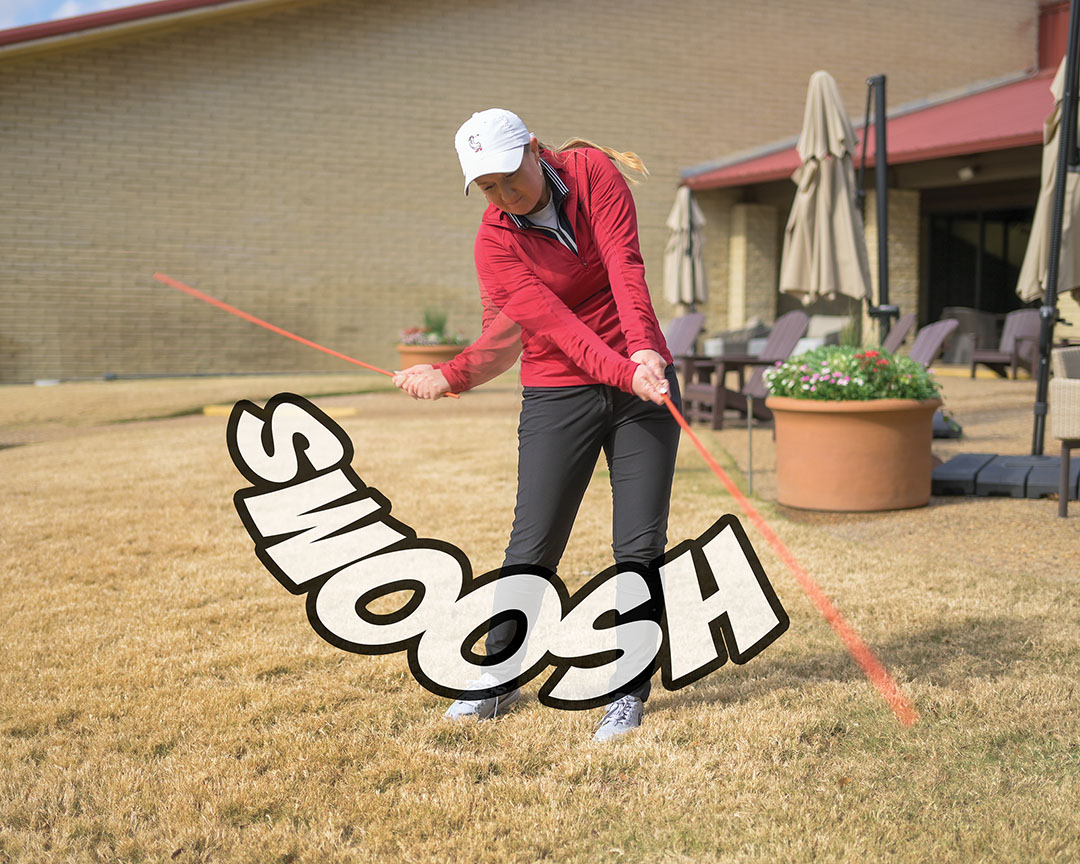
Make practice swings focusing on hearing the “whoosh” past the ball, not at it.
Where the club makes the loudest sound tells you a lot about your release timing. If you hear the swoosh before the ball, you released the club too early.
Track Your Numbers
Use a launch monitor when possible.
Important metrics:
Clubhead speed
Ball speed
Smash factor
Attack angle
If speed goes up but contact gets worse, distance may not improve. Speed + centered strike = yardage gains
Train Overspeed (Safely)
Overspeed training works. Research shows that swinging lighter clubs at maximum intent trains your nervous system to move faster.
Here are some drills to train overspeed and flexibility.
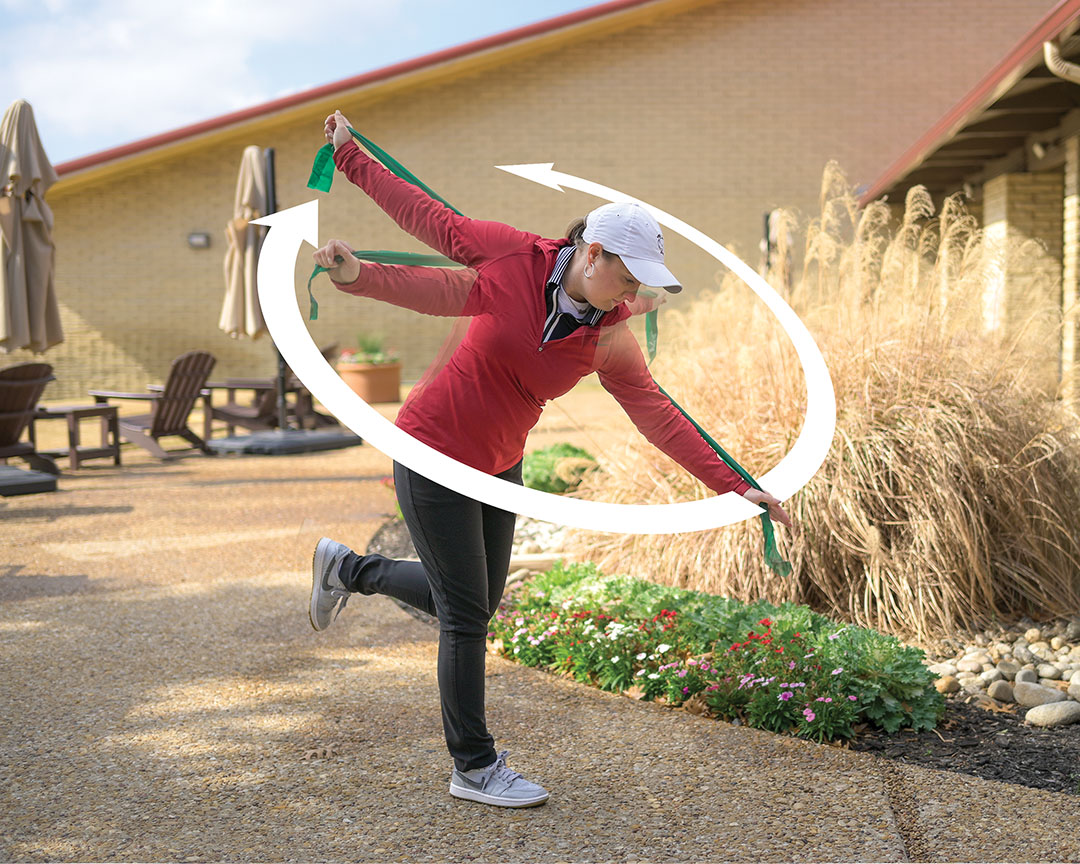
To warm up before a round or golf related exercises, try this. Place a resistance band in both hands, stretched across your back with your arms spread out. From here, stand on one foot and get in golf posture, practice rotating back and forth like a golf swing, keeping resistance on the band trying to hold your balance. Do ten rotations, then switch sides. To make this harder, place a foam pad under your foot and try to keep your balance while making these rotations.
For this drill, grab an alignment stick and place it in your lead hand, making swings a few inches above the ground, rehearsing hearing a swoosh sound by your lead foot. After you do this, switch to your trail hand and do the same thing, then switch to both hands. Make ten swings on each side and then with both hands on the stick, doing three sets of ten swings. I recommend doing this three times a week.
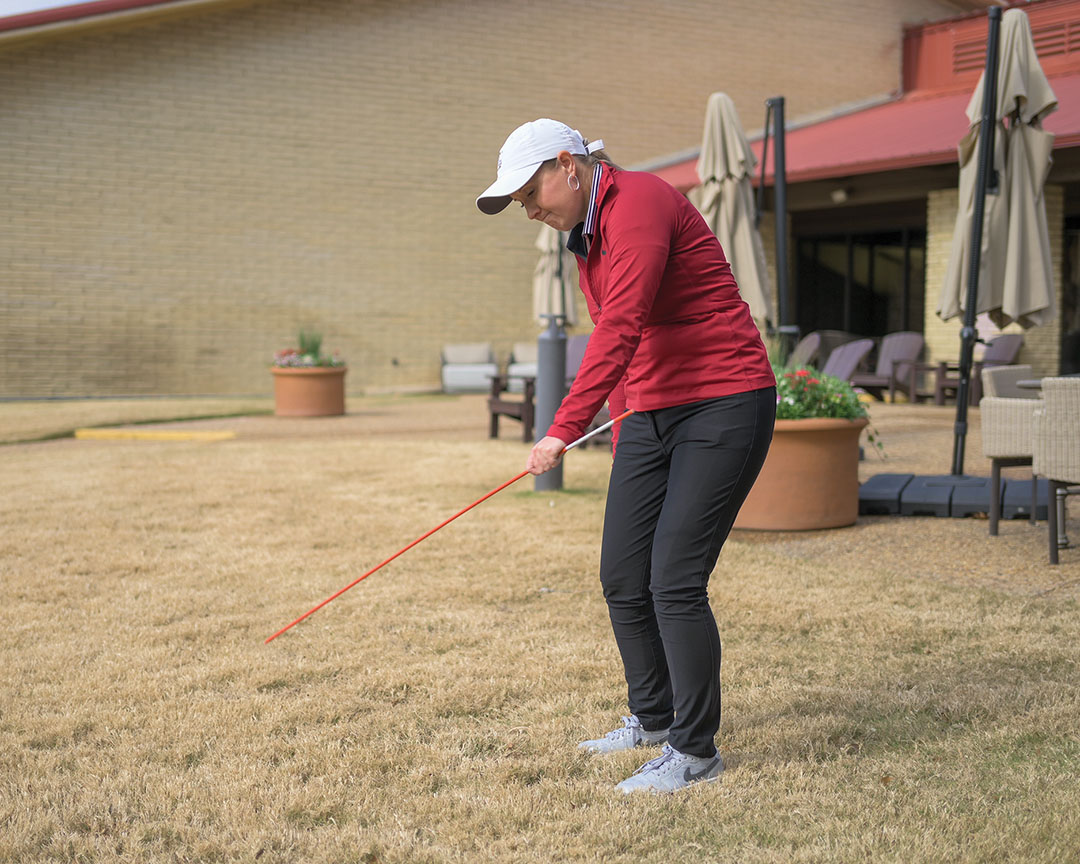
I love practicing using different weighted items. If you do not have a speed stick set, you can easily use an alignment stick, your club turned upside down, and your club turned the proper way for your three different weighted sticks to get faster. Make sure to always hear the swoosh sound after the ball or around your lead foot.
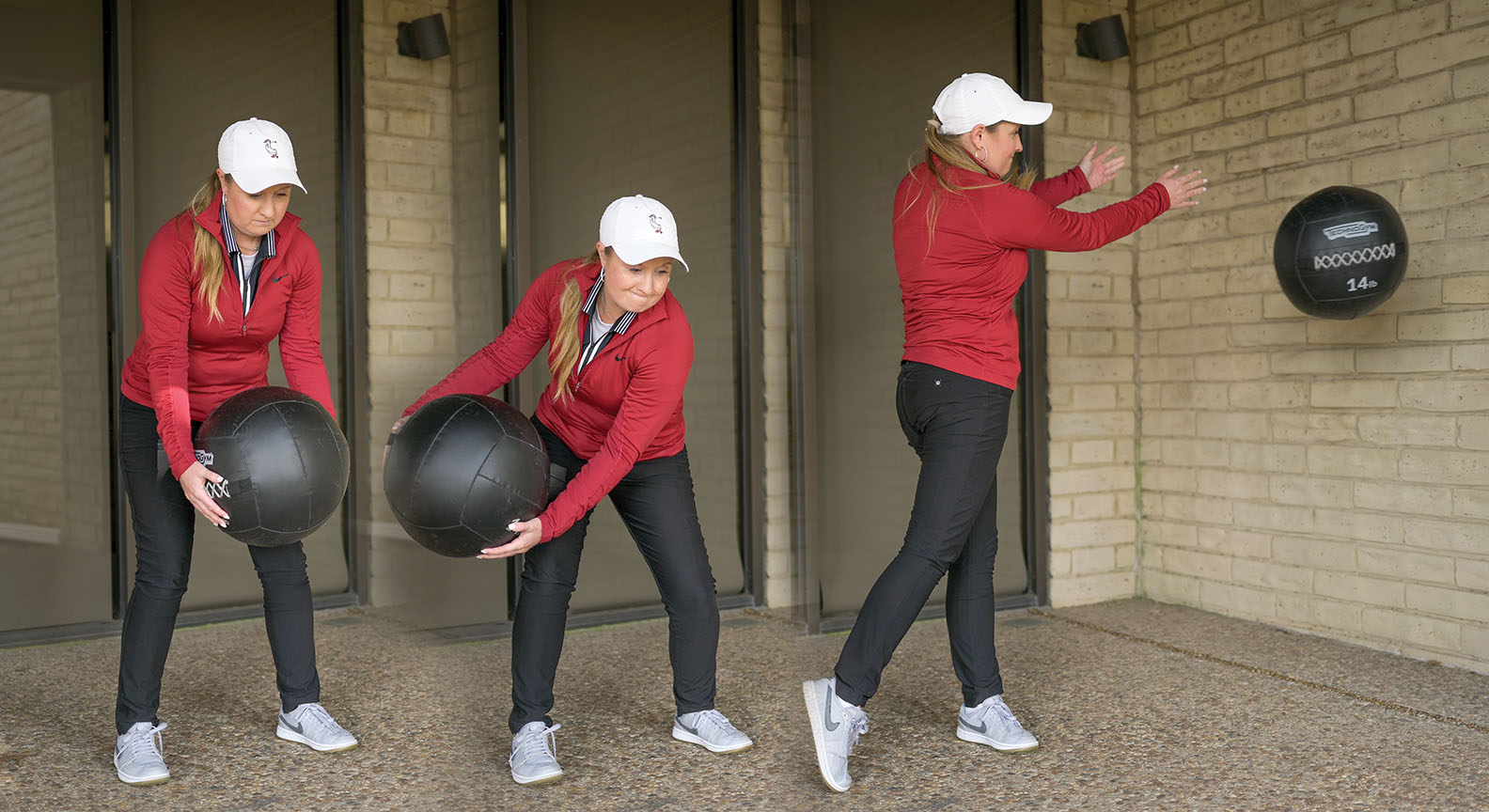
Weighted medicine ball throws. Start with a light weight and build up to something heavier. Always make sure to consult your doctor before doing any of these different activities. Get into your golf posture and from here hold a medicine ball in front of you with your arms relaxed. From here, turn your back to your target, squatting into your trail side, having your weight on the inside of your trail foot so you do not put stress on your knee. From here, push from the ground through your glutes and really focus on your glutes rotating you towards your target to move the ball to your target. When you do this exercise you should feel your feet, glutes, and core working. Arms are just along for the ride. Do three sets of eight throws on this exercise twice a week. Make sure to have always warmed up prior to doing any exercise.
Increasing clubhead speed isn’t about effort, it’s about efficiency. Train your body. Improve sequencing. Swing with intent and stay athletic. Small speed gains compound quickly, and nothing builds confidence like standing on the tee knowing you can send it past your buddies.
For more tips on how to gain distance, contact Kirsten Pike, PGA, at kpikegolf@gmail.com