
Mastering the correct wrist hinge is crucial in developing a consistent and powerful golf swing. Proper wrist hinge should be established early in the swing to prevent compensations later. The best ball strikers consistently follow these three checkpoints:
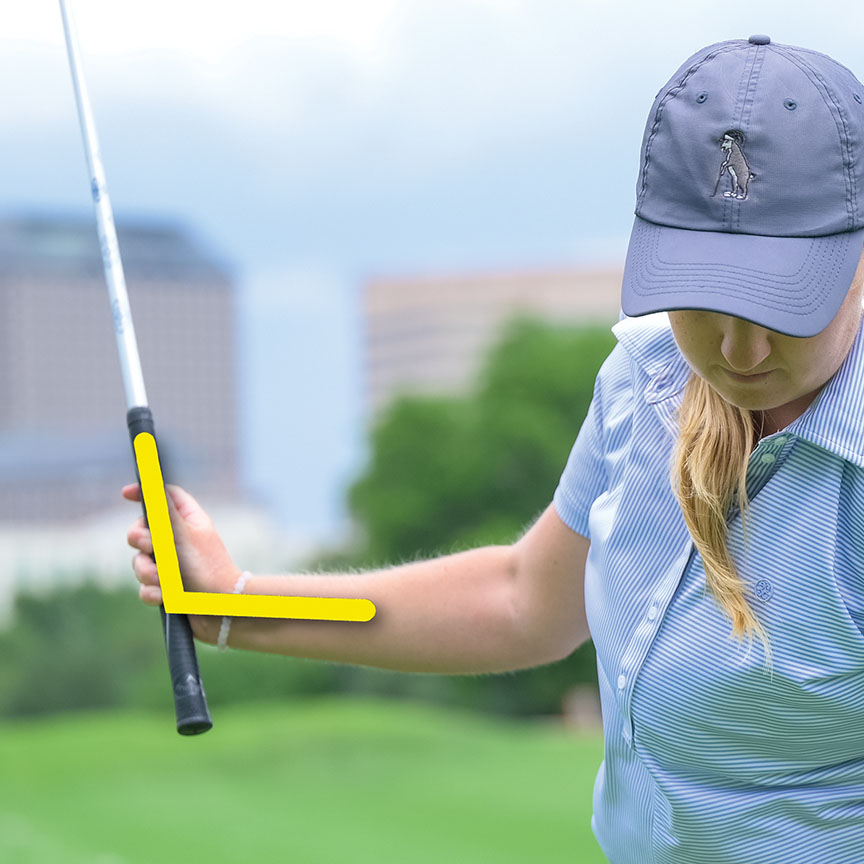
90-Degree Hinge
By the time the lead arm reaches parallel to the ground in the backswing, there should be approximately a 90-degree angle between the lead arm and the club shaft. This ensures proper wrist loading for a powerful downswing. This also helps create lag in the downswing so that the hands are in front of the ball at impact and can compress the ball better. If you do not get enough hinge in the downswing, it can result in topped, thin, chunked, and weak shots.
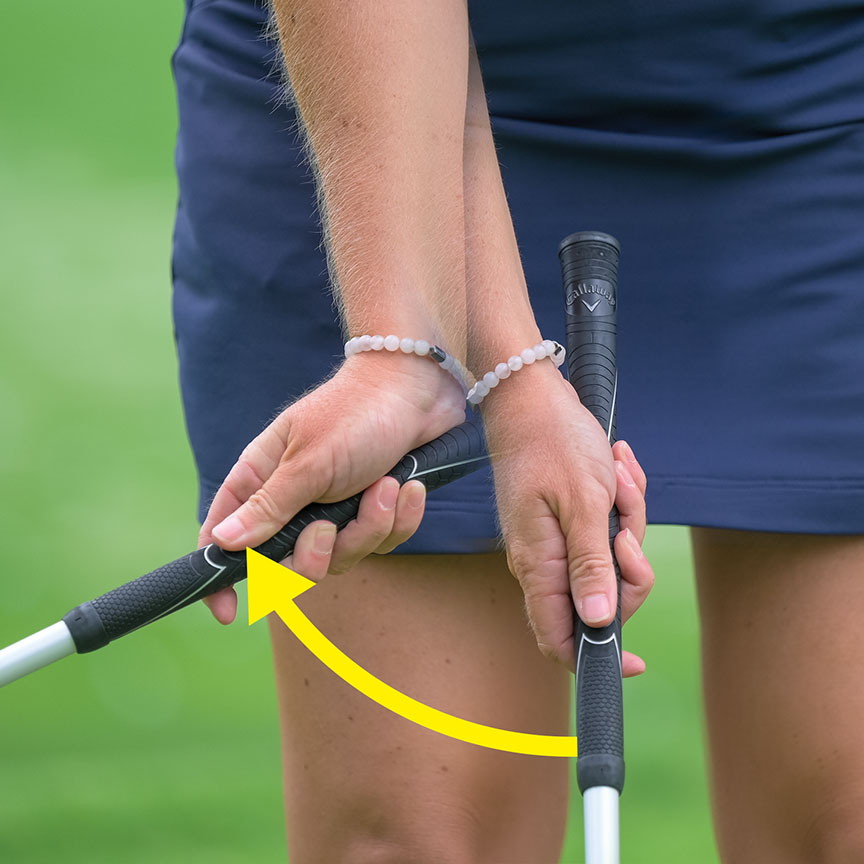
Correct Hinge Plane
At the lead arm parallel to the ground position, the grip of the club should be pointed between your trail foot and the golf ball.
Flat Lead Wrist
The lead wrist should transition from a slightly cupped position at setup to a flat position when the lead arm reaches parallel to the ground. This promotes a square clubface and proper shaft positioning for consistent ball striking.
Understanding Proper Wrist Motion
Wrist motion in the golf swing consists of two key movements:
The lead wrist controls the up-and-down motion (hinging the club like a hammer).
The trail wrist controls the back-and-forth motion (bending backward to support a flat lead wrist).
A Simple Drill to Train Wrist Hinge
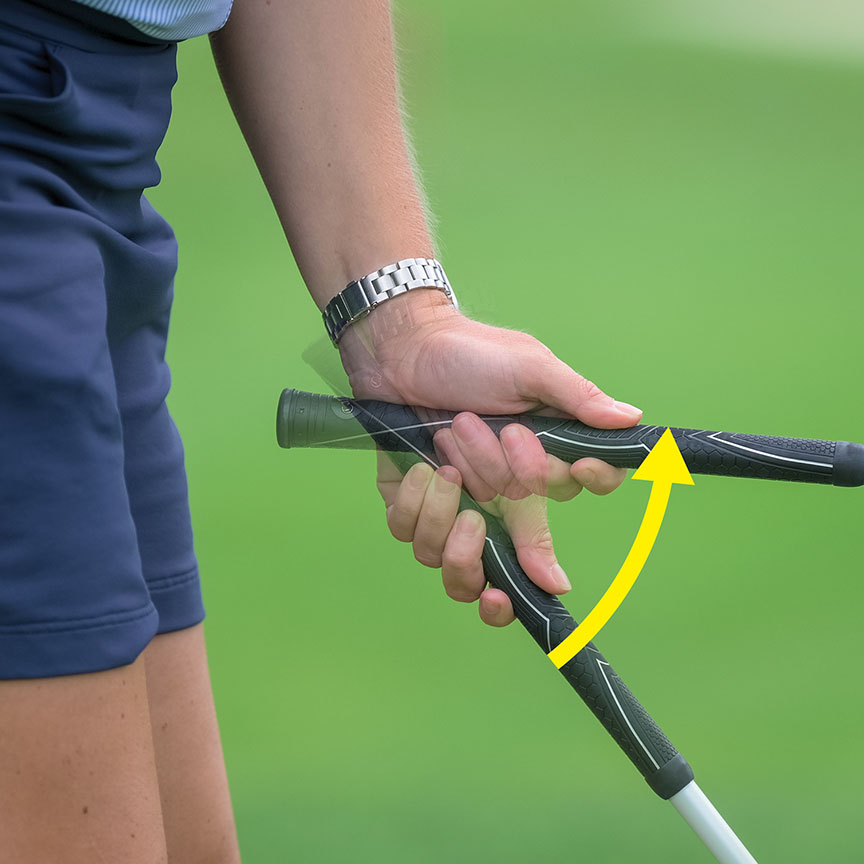
Using your lead hand, hinge the club up towards the sky as pictured above to about 90 degrees, then hinge it down, allowing the clubhead to strike the ground. Repeat this three times.
Next, grip the club with your trail hand and bend your wrist back (trail hand knuckles toward the forearm) in the backswing. This motion helps flatten the lead wrist, ensuring a more consistent clubface and impact position.
Finally, combine these motions by feeling the lead wrist hinge up and the trail wrist bend back progressively throughout the backswing.
Another drill you can do is to hold the club in your trail hand and go to your halfway back position where your trail thumb is pointing up to the sky and your arm and wrist make the letter “L.” From here, feel as if you are turning your trail palm away from you so that the trail palm is facing away from you. This will help you have consistency in your clubface and how you strike the ball at impact.

The Importance of Proper Wrist Hinge
Proper wrist hinge provides two crucial benefits:
Increased Power – Without wrist hinge, swing speed is dramatically reduced.
More Solid Contact – Wrist hinge ensures the clubhead descends properly, allowing for solid strikes and ball-first contact.
By incorporating these principles, you’ll improve both consistency in ball striking and power in your swing.