
Far too many amateur golfers skip out on putting practice. And honestly, I get it. Spending an hour on the putting green doesn’t exactly have the same appeal as striping drivers on the range.
A few years ago, though, I came across a drill that completely changed the way I practice putting. Not only does it keep practice engaging, but it also turns every putt into a performance-based challenge against yourself. The drill is called “Quarters,” a game popularized by Jordan Spieth.
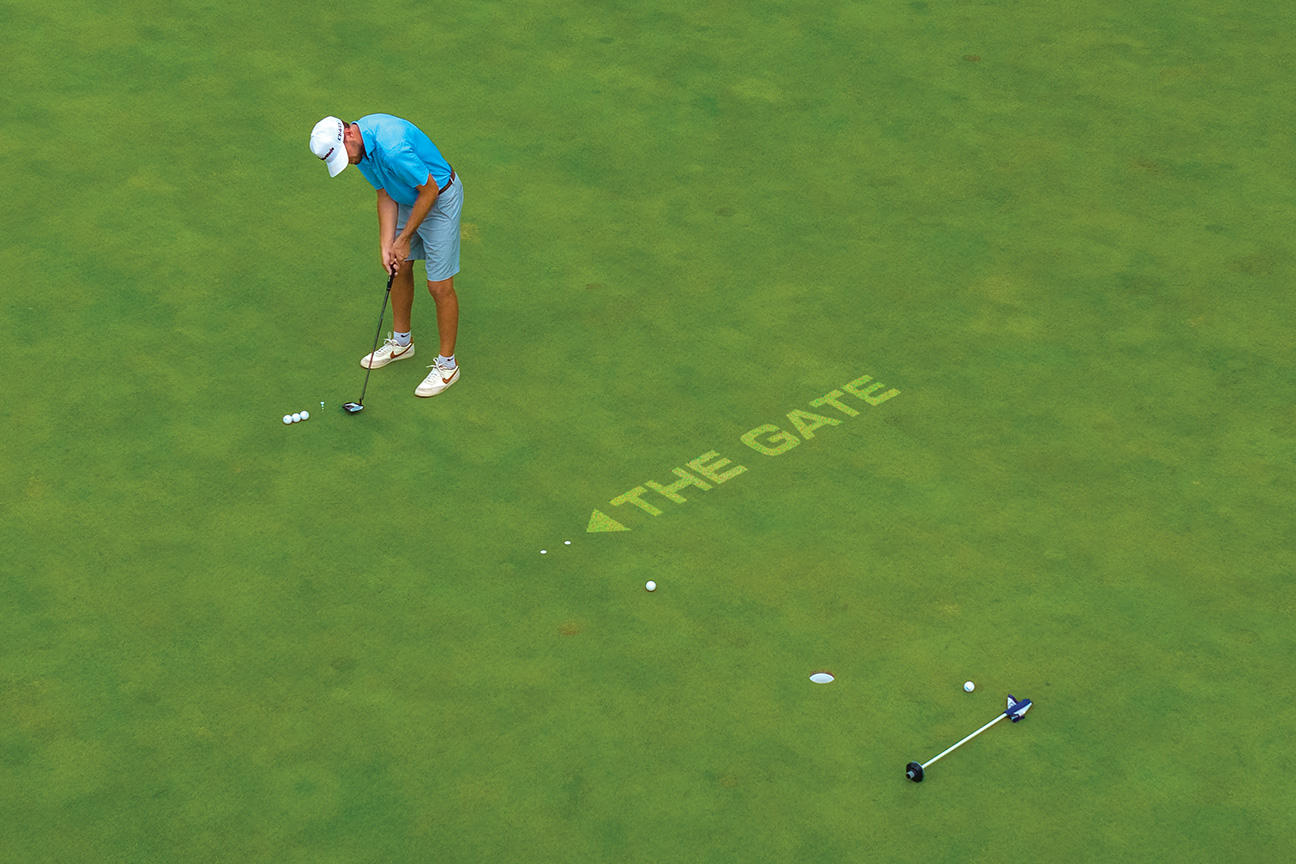
To set it up, you’ll need three quarters (or ball markers) and five golf balls.
Start by choosing a putt somewhere between 10 and 15 feet and place your first marker where you’ll be putting from. Next, read the putt just as you normally would. Once you’ve picked your intended start line, walk to roughly the midpoint of the putt and place two ball markers about one putter head apart to create a gate. Finally, stick the flag about two feet behind the hole. Once those three pieces are in place, you’re ready to go.
This drill is built around the two most important elements of great putting: start line and speed.
Here’s how the scoring works
One point if your ball rolls cleanly through the gate.
Two points if the ball finishes on the high side of the hole, between the cup and the flagstick.
Three points if you make the putt.
With five golf balls, a perfect score is 15 points.
When you’re first starting out, try setting a goal of 8-10 points before moving on. Personally, I like 10 points because it means you’re consistently starting the ball on your intended line while controlling your speed well enough to finish in the ideal scoring zone. Even when putts don’t drop, you’re reinforcing the skills that lead to more makes over time.
What I love most about this drill is that it combines green reading, start line, and speed control into one competitive game. Instead of mindlessly rolling putts, every stroke has a purpose, and every point gives you immediate feedback on what you’re doing well – and what still needs work.
Once you reach your target score, stay on the same hole but move to a different angle. This changes the break and forces you to read a new putt without changing the challenge.
One final tip: if you discover your read was slightly off, don’t move the gate. Instead, make a small adjustment to your starting marker to create a little more – or a little less – break into the same gate. The fewer times you have to adjust your starting position, the better your green reading is becoming. That’s one of the hidden benefits of this drill: it doesn’t just improve your stroke, it sharpens your ability to read greens as well.
The next time you head to the practice green, don’t just hit putts – play a game. You’ll probably practice longer, stay more engaged, and when the pressure is on during your next round, those five-footers won’t feel nearly as intimidating
Riter Kerr is the Junior Golf Coordinator at the Como Coaching Golf Academy at the The Nelson Golf and Sports Club in Las Colinas. Find Riter on Instagram @ RiterKerrGolf